All posts by C. J. Summers

I am a fourth-generation Peorian, married with three children.

Legal sparring continues before STB

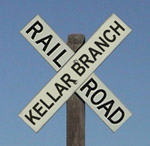
Kellar Branch RailroadIn the never-ending Kellar Branch saga, there’s a legal battle going on before the Surface Transportation Board (STB).

When the STB reopened the adverse discontinuance proceeding (this is the one on whether Pioneer should be kicked off the Kellar Branch in favor of CIRY), it asked for further evidence from the City of Peoria, the Village of Peoria Heights, and Central Illinois Railroad Company (CIRY) by February 12, and a reply from Pioneer Industrial Railway (PIRY) and Carver Lumber by March 5. The City asked for an extension of time which the STB granted, moving the deadlines back to February 22 for the Cities/CIRY and March 15 for PIRY/Carver.

Well, everyone played by the rules and got their legal arguments in by the required dates. But since March 15, there have been all kinds of extra filings. Friends of the Rock Island Trail sent a pro-trail filing that was so erroneous and riddled with mistakes that it was comical, and Peoria Heights sent a letter stating the results of their consensus to continue supporting the trail (which I know they did conscientiously, but technically is against the rules).

Then, on April 4, the Cities/CIRY filed a reply to Pioneer’s reply. This is rarely allowed in STB proceedings, and requires that permission be granted by the STB for such a reply to be included in the record. The Cities/CIRY didn’t wait for permission. They filed their request for permission and their reply to PIRY/Carver’s reply on the same day.

The Cities/CIRY claim that “[b]ecause the responses filed by PIRY and Carver, respectively, contain numerous half truths and factual distortions, the Joint Parties are compelled to seek the Board’s leave to submit this Joint Reply.” PIRY/Carver countered that this filing:

…is nothing more than a thinly-veiled attempt by the Joint Parties [Cities/CIRY] to submit argument and evidence that was previously available to them but was not submitted in their February 22nd comments and is only now being introduced in order to further delay this proceeding and compensate for the paltry and one-dimensional filings that they have previously offered in this proceeding.

Pioneer goes on to accuse the Cities of deliberately delaying the proceeding in hopes that Carver Lumber will lose enough money that they have to close their Peoria facility, which would remove the “obstacle” to the Cities’ plans to turn the Kellar Branch into a walking path. They ask the Board to simply deny the request to add to the record now that all the deadlines are past.

If the Board decides to allow the “reply to a reply,” Pioneer asks for 20 days to offer their response to the accusations made by the Cities/CIRY. That seems reasonable, since it was clearly the STB’s intent to provide equal time for both sides.

I just find it ironic that Pioneer is always painted as the villain that doesn’t follow the rules and obstructs things, and yet through this proceeding, they’ve managed to meet all their deadlines and it’s the Cities and other trail proponents that continue to flaunt the STB’s procedures. I suppose that’s to be expected, since they have no respect for the STB or the importance of interstate rail service in general.

Council Roundup: Land Development Code

Within the Land Development Code (LDC) there are four “form districts.” Those districts are the Sheridan/Loucks Triangle, the West Main Corridor, the Prospect Road Corridor, and the Warehouse District. These four areas underwent intense study and a customized form-based code was created for each district. Each area is essentially pre-planned by citizens through the charrette process and codified by the city’s consultants, Farrell Madden Associates.

Last night the City Council adopted the form-based codes for the four form districts (this includes the regulating plan and illustrative plan for each).

However, the LDC code for the rest of the Heart of Peoria Plan Area outside those form districts — i.e., the vast majority of the Heart of Peoria Plan Area — is not ready for prime time yet. The council tabled it until staff can make some revisions.

Here’s the issue. The portion of the LDC outside of the form districts (we’ll call this area a “base district” to distinguish it from a “form district”) was not subjected to the kind of intense study that the form districts were. The form districts are kind of like a new house — it’s a code built from scratch to the citizens’ specifications. The base district is like an old house with a little remodeling work done on it to bring it up to code — it’s basically our existing zoning ordinance with some modifications to make it more “new urbanist” (such as allowances for mixed use, urban setback regulations, etc.).

To continue the metaphor, the council wasn’t happy with the old house simply being brought up to code. They know we can’t afford to develop full-fledged form-based codes in all 8,000 acres of the Heart of Peoria Plan area, but they nevertheless felt the base districts did not go far enough. Specifically, the base district regulations don’t address the problems that are hindering reinvestment in older neighborhoods.

Gary Sandberg gives a good example. If you want to build a garage, the code says you can build one that is similar to other garages in your neighborhood. There’s a reason for this: you want to have some amount of consistency in your neighborhood. If everyone on your block has detached garages with alley access, you don’t want one house to have an attached garage with street access — it would be totally out of character for the neighborhood.

The problem is, you may live in a neighborhood where they used to have garages, but almost all of them have been razed, so now there are essentially no garages. Then what? Can you not have a garage? Or what if all the garages in your part of town are one-stall, and you want a two-stall garage? Are we going to make people build a one-stall garage or have to get variance to built a two-stall? The danger is that if there are too many hoops to jump through — if there are too many places for the City to tell people “no” — it discourages reinvestment.

There are also some potential conflicts with existing ordinances. Sandberg (who apparently has all city ordinances memorized) pointed out that the street ordinance prohibits private development within 100 feet of the centerline of a thoroughfare, yet the LDC allows (and in some cases requires) infill commercial development be built right up to the sidewalk. That needs to be reconciled.

I’m worried that the LDC is going to languish. It was not the intent of the council to have it languish, but we have to face reality. A major revision of the city’s comprehensive plan is coming up, and that’s the next big project on which Planning & Growth is going to focus. There’s no budget left for our consultants to revise the LDC. So staff is going to have to do the work, but when? Some council members believe staff should be able to do both. I don’t know enough about how they’re organized or what their work load is to make that determination.

But I do know that it would be a real shame and an excuse for further cynicism about local government if the LDC were left on the table too long or, worse, forgotten. Somehow this needs to stay on the front burner and get done soon before it loses momentum.

Houses fall in Arbor District

PeoriaIllinoisan has been keeping an eye on Maplewood, and there’s progressively less and less to look at. Bradley didn’t waste any time before starting in on the demolition. The definition of progress around here is tearing down century-old homes in a stable neighborhood to make way for a parking deck. Bradley will wither and die without this parking deck, so it’s a fair trade, they say.

Last night the City Council unanimously approved replacing the arbor at Rebecca and Main. Second district councilwoman Barbara Van Auken said that this was to show that the City is not only committed to the success of its institutions, but also committed to strong neighborhoods. I’m happy they’re getting their arbor rebuilt, but comparing this gesture to what the City allowed Bradley to do is unbalanced, to say the least. Is replacement of the arbor worth a whole block of houses plus the conversion of dozens of remaining properties to rental homes? My guess is the neighborhood would rather forget the arbor and have Maplewood back.

Incidentally, I found out that material salvaged from those homes will be resold through Habitat for Humanity’s ReStore.

Who will decide how Peoria looks?

One of the disagreements regarding the Land Development Code is over the regulations for Knoxville Avenue from Pennsylvania on the south to Virginia on the north.

The original Land Development Code (LDC), as written by the consultants based on community input, called for buildings to be set back from the road no farther than 80 feet. They could be right up to the sidewalk, but they couldn’t be set back more than 80 feet. If you’re like me and you can’t envision 80 feet easily, think of it this way: that’s enough space to put a parking lot with two rows of parking spaces and a drive aisle between them.

A local commercial real estate developer, Dave Maloof, wants there to be no maximum setback. This is understandable, considering his line of work. He wants to combine parcels and build strip malls with large surface parking lots in front. That’s what he does.

As a “compromise,” the city staff is recommending that we create a special “thoroughfare” district along Knoxville that would allow 150-foot setbacks. They essentially bought into Mr. Maloof’s contention that the lots/parcels along that stretch of Knoxville are too deep to justify the shorter setback. It was pointed out that parking could/should be put behind the businesses, but that was rejected amidst a plethora of excuses, such as, “no one will park back there,” and “retail shops can’t have two public entrances” (which is silly; they do at Grand Prairie). The Planning Commission agreed with the city staff, but the Zoning and Heart of Peoria commissions believe the maximum setback should stay at 80 feet.

I think the question is more basic. What we have to ask ourselves is, who will decide how Peoria looks? A small group of developers, or the City through community input? The Heart of Peoria Commission thinks it ought to be the City based on community input, and has said so in a letter than went to all Council representatives.

To demonstrate the negative impact large setbacks can have, Heart of Peoria commissioner Geoff Smith explained:

One of the best examples of the destructive effect that unregulated development and planning have on our local environment can be seen in the corridor of University Ave. between Forrest Hill and War Memorial Drive. This is a mean section of street space when considered in the context of the standards set forth in the Land Development Code. There is very little planting or green space in any proximity of the street edge. Traffic speeds by, and drivers have unlimited access to a huge expanse of paved parking areas immediately adjacent to the street. Pedestrians are wise to stay off what little remains of the crumbling and discontinuous sidewalks.

Another negative effect on the urban environment of areas like University Ave. is the impact that development with deep setbacks has on adjacent neighborhoods. The buildings that are pushed to the very back of the site have all of their service, delivery, trash collection, and utility areas immediately adjacent to the neighborhoods behind these developments. Garbage, odors, and other trash are just across a fence or alley from the rear of residential properties. Bright exterior lighting on buildings at night often provides direct glare to adjacent properties.

We don’t want another University street. Our city can look so much better than that. For too many years, we’ve been bending over backwards to adjust our city’s vision to developers’ visions. And what has it gotten us? Unrestrained prosperity? A city core that is considered a destination? Beautiful public places? No, no, and definitely not.

It’s time for the city to stand firm. We don’t want to turn away development, but we do want to turn away bad development. We want to turn away development that does not fit our vision for the city. We want to invite and incentivize development that does match our community vision.

There is plenty of land in suburban Peoria for cookie-cutter strip malls and seas of parking, but those aren’t the things that are going to bring people back into the heart of the city. As far as the Heart of Peoria Commission is concerned, allowing 80-foot setbacks is already a compromise of sorts. Because of less-than-ideal development that has occurred along that corridor for years, many of the businesses already have this setback, so for consistency and ease of development it seemed reasonable to the consultants to allow this pattern to continue — but not worsen.

I want to be clear that the goal here is not to frustrate developers. It is to make Peoria a beautiful place to live and work. We want to see the city revitalized. The kind of development that has taken place on University street has not accomplished that, so we want to see regulations in place that will keep bad development like that from happening elsewhere in the Heart of Peoria area. But at the same time, we want to invite developers to work within the new guidelines to bring in retail stores, business offices, and residential units that will have the form and pedestrian scale that we envision for this area.

Is that too much to ask?

Land Development Code on City Council agenda

UPDATE (4/11/07): Here’s an updated map of the Heart of Peoria Plan Area boundaries.

On tap Tuesday night at the City Council meeting: the long-awaited, much-anticipated Land Development Code (LDC).

What is it? The LDC is a big step toward codifying the Heart of Peoria Plan. It’s essentially new zoning laws for the Heart of Peoria Plan area (I’m using the term “zoning” in a generic sense here). In case you’re wondering what that area is, it’s the portion of Peoria within the heavy border on this illustration:

Heart of Peoria Plan Area

It covers roughly 8,000 acres of the oldest portion of Peoria. This part of town grew up in the 1800s and early 1900s when transportation was decidedly low-speed. Hence, there’s a lot of density in this part of town: houses are close together, businesses front the street, and things are generally built to pedestrian scale.

The problem is that the current zoning laws that cover this older portion of town are the same zoning laws that cover the suburban landscape of the northernmost portion of Peoria. Another way of saying this is that our zoning is “one size fits all.” But unfortunately, one size does not really fit all.

The zoning needs of north Peoria are a lot different than the zoning needs in the older parts of town. Whereas you would expect to find lots of surface parking in suburban areas and businesses set far back from the road (after all, the only access to these places is via automobile), you don’t expect this on Main street. On Main, you expect buildings to be built right up to the sidewalk, to utilize shared parking in back of the businesses or along the street, and to be pedestrian in scale.

But our “one-size-fits-all” zoning laws try to fit suburban design standards into older, urban parts of the city. Thus, we have developments like Campustown, and businesses like Jimmy Johns that set their business back 80 feet from the road with surface parking in front. This is not necessarily the fault of the developers, but rather the zoning laws that require suburban-style development without any regard for the urban character of the street. Like trying to put a round peg in a square hole, the result is, frankly, a mess.

And that’s where the Land Development Code comes in. The LDC is designed to preserve and maintain the urban character of the older parts of the city. It encourages redevelopment and infill, but with design standards that are compatible with the existing business districts and neighborhoods.

Form and use

In addition to the look, or form, of urban design, another big difference between urban and suburban zoning is in the area of permitted uses. In suburban areas, different uses are segregated: residential areas are separated from office parks, which are separated from retail areas, which are separated from industrial areas, etc. The only connections between each of these enclaves are streets, making suburbanites completely automobile-dependent.

In contrast, urban areas allow a mix of uses. Stores can have apartments above them, offices can be adjacent to or between retail shops, etc. This, coupled with the density and pedestrian scale of development, means that one’s basic needs are all within walking distance — one could conceivably live, work, and shop without having to drive (although driving is not precluded, of course).

What does that mean? It means less money spent on gasoline. It means that older people who are quite capable of living independently but can’t drive anymore don’t have to be “warehoused” in retirement homes. It means children who are old enough to go to the store unsupervised but not old enough to drive can ride their bikes to go shopping or to a movie instead of relying on someone to chauffeur them around.

But perhaps at its most basic level it means choice. Many people actually prefer to live in an urban area. In fact, the much ballyhooed “creative class” that Peoria is trying to attract likes urban living a lot, if surveys and polls are to be believed. Peoria has plenty of suburban amenities to offer, but is sorely lacking in urban living options. This is a chance to revitalize the older part of town, not by trying to mimic the suburbs which it could never do adequately anyway, but by building on its strengths.

Going forward

The Land Development Code is a big topic — too big to be discussed in just one blog post. So consider this an introduction. Today and tomorrow, I’ll be posting some follow-up posts about what the LDC has in it, what objections might come up, and of course, reaction to the city council discussion tomorrow night.

The code is such a big document, it’s unlikely that final action will be taken Tuesday night — although it could. I would expect, though, that this would span a couple of council meetings.

He is risen!

I don’t often talk about my faith here on the blog, but since today is Easter Sunday, the holiest of Christian holidays, I think it’s only appropriate that I do.

Another name for Easter is Resurrection Day. I, along with millions of other Christians, celebrate today in remembrance of Jesus rising from the dead. Christ’s resurrection is the linchpin of the Christian religion. That’s why the Apostle Paul said:

Now, brothers, I want to remind you of the gospel I preached to you, which you received and on which you have taken your stand. By this gospel you are saved, if you hold firmly to the word I preached to you. Otherwise, you have believed in vain.

For what I received I passed on to you as of first importance: that Christ died for our sins according to the Scriptures, that he was buried, that he was raised on the third day according to the Scriptures, and that he appeared to Peter, and then to the Twelve. After that, he appeared to more than five hundred of the brothers at the same time, most of whom are still living, though some have fallen asleep. Then he appeared to James, then to all the apostles, and last of all he appeared to me also….

And if Christ has not been raised, your faith is futile; you are still in your sins. Then those also who have fallen asleep in Christ are lost. If only for this life we have hope in Christ, we are to be pitied more than all men.

But Christ has indeed been raised from the dead, the firstfruits of those who have fallen asleep. For since death came through a man, the resurrection of the dead comes also through a man. For as in Adam all die, so in Christ all will be made alive.

All those eye-witnesses — that’s what really sways me. Not just one or two, but over 500. That’s a pretty good testimony.

That’s what we celebrate today. Jesus Christ took the punishment for our sins on himself so we could be reconciled to God, and by putting our faith in Him and His sacrifice, we can have the assurance of eternal life.

Happy Easter, everyone.

Dahl’s move reported in March issue of “Tune IN”

Dave Dahl’s move from WMBD radio to the Illinois Radio Network in Springfield was reported in the March issue of “Tune IN,” the newsletter of the Illinois News Broadcasters Association (INBA):

Oh My! Mr. Dahl Goes to Springfield
By Will Stevenson, WKEI-AM/Kewanee

The self-proclaimed “most hated man in Peoria media” is moving on. Dave Dahl, midday news anchor and former News Director of WMBD Radio in Peoria, has been named Springfield Bureau reporter for the Illinois Radio Network. Dahl will be replacing Ryan Hermes, who moved to Chicago to become morning reporter for WBBM-AM in Chicago.

“I’m excited about being part of the Statehouse scene and getting to know the cast of characters there, as well as being part of a highly respected network on Illinois’ best radio news stations,” Dahl said. “I am very sad to be leaving Peoria after eleven years, but am ecstatic to still be in radio news – and in INBA!”

Now if we can just get a radio station in Peoria to affiliate with the Illinois Radio Network, we can continue to hear Dahl. Right now the nearest affiliates are WBYS-AM 1560 (Canton), WJBC-AM 1230 (Bloomington), and WGIL-AM 1400 (Galesburg).

I send the money, WCBU thanks my wife

I decided to give some money to WCBU this year for their pledge drive. I gave it over their website — put in my name, address, phone number, credit card information, etc.

Today, my wife got a thank-you letter from WCBU. My wife is an alum of Bradley University (and yes, she can prove it in a moment’s notice) and of course WCBU is part of Bradley University, so it appears that Bradley’s computer matched up the address of my gift with her address in the alumni database and — voila! — a thank-you note was sent out to the wrong person.

Does it make a difference, since we are married, after all? Actually, yes. My wife thinks that NPR is liberal and would never have considered giving WCBU any money in her life. They really should be thanking me for the gift. That is, if they ever want me to send them any money ever again.*

*Disclaimer: This is an empty threat. My friend Jonathan Ahl personally thanked me already. The letter was computer-generated and signed by Thomas Hunt, Executive Director. Nevertheless, I think it’s poor form for a business to send a thank-you note to the wrong individual.

An apology to Chronicle commenters

I just discovered to my horror that my spam filter (called “Akismet”) has been blocking several comments that are not spam at all, including comments from Karen Carter and Peoria Heights Mayor Mark Allen. I know that it is frustrating when you write a long comment and then it just disappears; it makes you feel like you’ve just wasted your time writing the darn thing. I sincerely apologize that you’ve experienced that on the Peoria Chronicle.

I don’t know why these comments got caught up in the filter. Akismet’s algorithm for identifying spam is a secret; overall it’s pretty good at catching things — a little too good, apparently. I have “de-spammed” your comments and they now appear in the comments sections of the appropriate posts with the proper timestamp. I would encourage all my readers to go back over the comments of some recent posts to see what may have suddenly appeared.

I will be sure to check the spam filter regularly from now on, as I certainly don’t want to miss any more comments. Thank you all for reading and for taking the time to share your thoughts.