All posts by C. J. Summers

I am a fourth-generation Peorian, married with three children.

A pedestrian-friendlier Washington Street?

Ironically, Tarter’s article (“Destination Downtown,” 7/4/06) is about the push to make downtown more pedestrian-friendly. One could be excused for wondering why this is necessary when there is such a plethora of parking on every block. But leaving that aside for a moment, let’s look at one of the suggestions being floated:

“It’s fundamental that we make (Washington Street) more pedestrian-friendly,” said City Manager Randy Oliver indicating the six-lane road creates a barrier between Downtown and the riverfront.

Okay, that’s not an intrinsically bad idea. But when DPZ Consultants (authors of the Heart of Peoria Plan) looked at our street grid, they designated downtown streets as either “A” grade or “B” grade. “A” grade streets were suitable for slowing down traffic and making more pedestrian-oriented, whereas “B” grade streets were suitable for service entrances and other more automobile-oriented purposes.

Guess what they designated Washington Street? Yep, “B” grade. Their reasoning was that, since so many parking garages open onto it, it was already being used as a service street. Plus, it’s a state route (Route 24), which carries a fair amount of truck traffic through town.

The state route designation adds even more complexity than that. Not long ago, Steve Van Winkle wanted to add diagonal parking along a portion of Washington Street and the state denied his request. When I met with Van Winkle at one of the recent charrettes, I asked him about that, and he stated that Route 24 would most likely have to be moved before Washington could be made more pedestrian friendly.

So, the question becomes, where do we put Route 24 so that it doesn’t “create a barrier between downtown and the riverfront”? Or would it be better to leave Washington as a “B” grade street, but try to do little things (that meet state approval) to make it marginally more pedestrian-friendly?

Cat Logic: If we have too much, then we need more

In today’s installment of “Cat Logic,” we turn to Steve Tarter’s column in today’s business section of the Journal Star titled, “Destination Downtown.” I was unable to find it on the web for linking purposes, but here’s the gist of it:

Caterpillar Inc. hired Walker Parking Consultants (wow, a whole company dedicated to parking consulting — what a fascinating job that must be) to look at “a 13-block Downtown area that includes the former Sears block site for Caterpillar’s visitors center.”

Their findings? There’s a surplus of parking, and it’s anticipated that there will be a surplus of parking in the future:

In an area along the river bounded by Adams, Fayette and Harrison streets, consultants determined there were 5,011 parking spaces available with the highest use coming on a weekday morning when 64 percent of the spots were occupied. The lowest use came on a Saturday morning when only 15 percent of available parking was used.

Now, how would you, Average Joe, interpret those findings? If it were me (and I’m no high-paid executive or parking consultant), I would say we don’t need any additional parking created downtown. If, at the very busiest time of day less than 2/3 of the parking is being used, I’d say — we’ve got this problem licked. We’ve reached a saturation point; no more parking needed. Done.

What does Cat say?

Despite the finding, Caterpillar is looking for more parking at the location. “There’s a great deal of unused parking in that (Downtown) site. But Museum Square will depend on convenient parking of those visitors,” said Mark Johnson, Caterpillar’s project manager; referring to an underground parking garage that will add $3 million to the project cost while providing space for 189 cars.

Huh? Now, think about this a second. At the busiest time of any given week, not more than 64% of 5,011 spaces are being used. That means there are at least 1,804 spaces available within a 10-block area downtown at any given time. But Cat believes that the this site’s success will “depend on” having 189 more spaces (at about $15,873 per parking space) immediately on site. I’m gonna go out on a limb here and say a Six Sigma black belt hasn’t been working on this project.

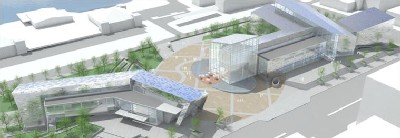
Incidentally, note the central location of Museum Square in the study area:

Downtown Parking Study Area

All the parking in the 10-block area — between 1,804 and 4,259 empty spaces at any given time — is within two blocks of Museum Square. In fact, the majority of it is within one block.  But according to Cat, that’s not good enough.

This is a colossal waste of money on top of an already flawed design for the Sears block. The Heart of Peoria Commission, which has been saying all along that we don’t need more parking downtown, has been vindicated by Cat’s own independent consultant’s study. But it doesn’t matter. Cat will continue on their present course, undeterred by the facts.

District 150 accused of racial discrimination

Kay RoysterThe Journal Star reports today that former Peoria Public School Superintendent Kay Royster is suing the school board (and board members Aaron Schock, Vince Wieland, Sean Matheson, and Mary Spangler individually) for racial discrimination.

Read the case for yourself
(13-page PDF file):
Kay Royster Suit against District 150

Everything I read in the suit can be explained based on performance issues rather than racial discrimination (in my opinion), except for this:

In approximately October 2002, less than three months after her contract period began, a meeting of Board Members was organized to discuss terminating Royster. Board members Allen and Martha Ross were not invited to the meeting. Both Allen and Ross are African-Americans.

If that allegation is true, it certainly is damning. Why would Allen and Ross be excluded if it were a mere performance issue? It will be interesting to follow this case and see the evidence presented during trial, assuming the parties don’t settle out of court before then. Royster has demanded a jury trial.

Meanwhile, the children of district 150 continue to be the ultimate losers in this battle. No matter whose fault it is, money that should be going to provide the best education for the students is instead going to lawyers.

Governor to protect Peoria taxpayers before signing PBC bill

I’m not a fan of Gov. Blagojevich, but I was thrilled to read this in today’s paper:

“We just want to make sure that if there’s going to be any talk about an increase in anybody’s property tax, that it can’t just happen by the School Board (or the Public Building Commission). It’s got to be by referendum,” Blagojevich said Friday.

Thus, he’s going to amend the PBC bill (SB2477) that Sen. Shadid asked him to sign to ensure just that. This is a victory for Peoria County taxpayers. The possibility of the school board being able to get around a referendum to increase taxes was the biggest complaint about the PBC bill. The governor’s amendment will make sure taxpayers are protected.

I Hate Driving

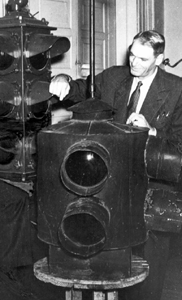
Lester WireIn 1912, Lester Wire invented the first American traffic signal in Salt Lake City, Utah, and driving hasn’t been the same since. In the 1950s, they even invented the interstate highway system just to get away from the cursed devices.
Traffic signals are a large part of why I hate driving. And now that Peoria has them posted just about every 100 feet all over the city, I’m starting to think I could travel faster by bicycle.

Stop. Wait. Wait. Arrow. Wait. Go. Stop. Repeat at every intersection.

Now I know why Chevy came out with the “Sprint” back in the ’80s. No vehicle has been more aptly named for city driving, where sprinting is all you can accomplish between stop lights that are apparently timed to keep traffic travelling an average of 20 mph.

The worst lights of all are the ones that change for no reason. For instance, the light at Knoxville and McDonalds, south of McClure. There may not be anyone there at the light either direction in the middle of the night, but it will change just for the heck of it as a lone car approaches from the north. And there you sit, idling, burning precious fossil fuel while trying to convince yourself it would be wrong to run it, even though there’s no one around to see you.

Stop lights add frustration to an experience that is already maddening because you have to (a) suffer interminable road construction and (b) share the road with other drivers.  Ever seen car commercials from the ’50s, where having a fine automobile on the open road meant freedom, relaxation, and exploration?  Ha!  Maybe when there was only one car per family and all the highways were new that was possible.  Today, it’s not uncommon for a family to have more vehicles than licensed drivers, and of course all the nation’s highways are in a state of perpetual disrepair.  The 1950s’ dream has become the 2000s’ nightmare.

Driving has lost its allure for me.  I would be happy riding the bus to work every day, if I didn’t need my car to run job-related errands all week, and if it didn’t take three times as long as driving.   Occasionally, when my car has been in the shop, I’ve taken the bus to and from work, and despite the extra time it took, I found it very relaxing.  I could read the paper, plan out my day, and not once be concerned about traffic lights or other drivers.

Hmmm…  Read the paper, plan the day, be unconcerned about lights or other drivers — that pretty much sums up what the driver in front of me was doing on my way to work today….

Photo credit: UDOT

News flash: Shadid okays PBC bill

George P. ShadidDuring a presentation about the Public Building Commission at tonight’s City Council meeting, it was revealed that Senator Shadid advised the Governor to approve SB2477, a bill he had previously asked the Governor not to sign pending public input on the site of District 150’s new school building.
“Senate Bill 2477 would allow the Peoria Public Building Commission the temporary authority to enter into construction contracts with Peoria School District 150.”

Circle the Square

I just love irony.

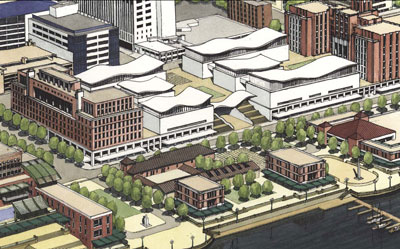
A mere four years ago, the city, then led by former mayor Dave Ransburg, brought in Andres Duany to come with a plan to revitalize the Heart of Peoria. Duany’s company, DPZ, came to town and got a lot of public input through the charrette process. What did the public want? Something like this:

Duany museum

Urban density. 24-hour activity. Residential component. New Urbanism. The Heart of Peoria Plan.

What did they get? Here’s the approved site plan:

Museum Square

Not dense. 9-5 activity. No residential component. Suburban. Antithetical to the Heart of Peoria Plan.

The irony part? They want us to help pay for it now.

Mayor Jim Ardis and seven former mayors pledged Monday to use their collective star power to help raise at least $16 million for the new regional museum over the next year…. “This isn’t for a group of mayors who have sort of done their thing; it’s for you,” said former Mayor Jim Maloof…. “The single most important project I see, along with the Civic Center (expansion), is this museum,” [former mayor Bud] Grieves said. “Whether you can give $5, $500 or $500,000, everybody ought to step up to the plate.” (Source: Journal Star)

The Mayor’s Circle will be out and about speaking to individuals, community groups and civic organizations gathering grassroots support for Museum Square. (Source: 1470 WMBD)

Pardon my frank language, but that takes a lot of balls. First they design something that’s almost the exact opposite of what residents want, then are shocked — shocked, I say! — to find that the money isn’t rolling in. What to do? Redesign? Listen to residents? Nah! “Let’s try to gather grassroots support for our design! Clearly the problem is that residents can’t see the wisdom of our plan.”

Not to mention the fact that one reason the cost of construction is so high is due to the unwarranted and expensive underground parking deck they want to build — against the recommendation of the Heart of Peoria Commission.

“It’s for you,” Maloof says. With all due respect, if it were for us, it would look like the Heart of Peoria Plan, not the Cat Visitor Center Plan. I’ll save my money, thanks. We’ll all be supporting this boondoggle through our property taxes soon enough.

UPDATE (6/27/06 8:44pm):  PeoriaIllinoisan has also written an excellent post on this issue.

Ren Park plans go south; but setback could be blessing in disguise

Ren Park LogoNot long ago there was a lot of optimism regarding Renaissance Park, formerly known as the Med-Tech District. Work is still progressing on the PeoriaNEXT Innovation Center, but the next big project that was supposed to land on West Main street has gone south — to Southtown, that is.

A joint venture that includes OSF St. Francis Medical Center, Methodist Medical Center, and RehabCare of St. Louis, considered building their planned long-term acute-care facility in Ren Park. Being on Main just up the hill from the hospitals seemed like a reasonable location, especially since it’s in an area the city is eager to see developed and might be willing to offer some incentives for locating there.

In fact, according to the Journal Star, the city offered “more than $1 million in financial incentives from the city, including $750,000 in property tax abatement over five years and about $300,000 in sales tax abatement.” But despite all that assistance, and even the willingness of the hospitals to pay a little extra to put their hospital on the west bluff, it still wasn’t financially feasible.

Why not? Because some property owners were asking more for their land than the hospitals were willing to pay. Second District Council Member Barbara Van Auken is quoted as saying, “We cannot get in a mode where the bid developments are being held up by extortion.”

That’s pretty strong language, considering this is simply the workings of the free market. Property owners are free to ask whatever price they want for land they own that someone else wants. It’s not like they’re obligated to take the first offer that comes down the pike. From the Journal Star article, it sounds like some of those property owners — maybe the ones with the high asking prices — aren’t all that anxious to sell.

So I don’t blame property owners for wanting to get the best price they can for their property, especially if they don’t really want to move. But it does seem to hamper the city’s strategy for the Ren Park area. The idea was to fill it up with medical and technology companies — either home-grown or relocated — because of its location close to the hospitals and Bradley University. If the property owners aren’t willing to sell, or have asking prices that make the city’s plans unfeasible, isn’t that a bad omen for the future of this area?

That’s what I asked Barbara Van Auken in an e-mail. She responded, “I can only hope that in the future property owners on West Main are more realistic in their financial expectations. If not, obviously development will be much slower than we had hoped.”

Not knowing which properties were at issue, we can only speculate about how slowly West Main will be redeveloped. But considering the size tract the hospitals are trying to purchase in Southtown (more than six acres), I’m going to guess they were asking for a pretty large chunk of land on Main Street as well, and that most property owners were willing to sell, but there were a few strategic properties that were asking a high price.

If that speculation is somewhat accurate, then it may just be that Ren Park is going to be transformed in bite-size pieces instead of large swaths. And that’s not necessarily a bad thing. If acres of land are taken up with a few large developments, it would make the area less diverse and, thus, less appealing as a new urbanist neighborhood — one of Ren Park’s big selling points.

It could be that this delay in redevelopment is really a blessing in disguise. Maybe instead of one development making a big splash, we’ll see a lot of smaller projects quietly remake the area without the need for a lot of city incentives. I kind of thought that was how it was supposed to work anyway.