
Apparently HOI Group Sierra Club is out of the mainstream

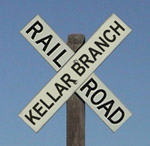
Joyce Blumenshine is the chairwoman of the Heart of Illinois Group Sierra Club. She has long been a proponent of removing freight rail access on the Kellar Branch and converting the corridor to a hiking/biking trail. On February 6 of this year, she wrote a letter to the Journal Star again opposing train service on the branch, plus scoffing at the idea of a trolley being run on the line:

The rehash of the mystical trolley line is a bait and switch – another attempt to derail the trail for the benefit of Pioneer Railcorp at great cost to our community….

She signed her letter, “Joyce Blumenshine, Heart of Illinois Group Sierra Club.” So, she’s speaking for the Sierra Club.

The funny thing is, if you look at the Sierra Club’s website, you’ll find that Blumenshine is all alone in her criticism of trains and trolleys. The Sierra Club actually likes them. A lot. In fact, they have quite a bit of information on rail transportation, the quality of life and economic development it brings, and its positive effect on the environment.

In their 2004 Report on Sprawl (ironically titled, “Missing the Train”), the Sierra Club said, “Public transportation, particularly rail, spurs ‘transit-oriented development’ that helps create a vibrant environment where people can live, work, shop, and use public transportation with ease” (emphasis mine). Isn’t that interesting? And what’s the effect on the surrounding neighborhoods and businesses?

In the Washington, DC area, the public transportation system (Metro) has generated nearly $15 billion in surrounding private development. Between 1980 and 1990, 40 percent of the region’s retail and office space was built within walking distance of a Metro station.17 This has led to lively corridors with plentiful restaurants, shops, offices and residences in places like Alexandria, Clarendon and Arlington, Virginia; Bethesda and Silver Spring, Maryland; and the heart of Washington, DC.

The American Public Transportation Association (APTA) notes that demand for these transit-oriented neighborhoods far outpaces the supply, and cites studies showing that 30 percent of housing demand is for such communities while less than 2 percent of new housing is put in these areas. APTA states, “Real estate experts and demographers have … concluded the supply of TOD-style living environments, focused on high-quality public transportation, lags far behind demand.”18 APTA also calculates that the retail market benefits, because for every $10 million invested in public transit, they gauge that local business sales increase by $30 million.

“But that’s a full-fledged public transit, light-rail system,” you say. Granted. But consider a situation in Santa Cruz, California, that has some similarities to our situation here. There, like here, there is a scenic rail line that snakes through their county, and local Sierra Club members want to turn it into a hiking/biking trail. And there, like here, there is controversy surrounding it. Not the same controversy, but controversy.

The disagreement begins when discussing the best way for the county to purchase the corridor from Union Pacific. There are two options for buying the corridor. The first involves accepting $11 million of State Prop. 116 money…and matching it with transportation funds already allocated by the Santa Cruz County Regional Transportation Commission (RTC)….

In the first option, the State will provide the $11 million only if the county moves forward with some form of passenger rail service such as the proposed recreational Trolley [emphasis mine]. For many, this is a fair trade off. In fact, many people like trains and think the idea of moving around Santa Cruz by rail attractive.

There, the Sierra Club is in favor of the trolley with a trail alongside, within the corridor, but there are some residents who live along the train track that are against the trolley. The Ventana Chapter Sierra Club dryly muses, “It isn’t clear why people who don’t like trains purchased homes next to the railroad tracks.” Some are wondering the same thing here, especially about a certain Journal Star editor who lives near the train tracks but doesn’t want to see or hear trains on them.

The report concludes by saying, “The Sierra Club favors transportation that is energy and land conserving and is the least polluting. The Trolley project and the use of the rail corridor for bicycle travel has enormous potential to reduce automobile trips in Santa Cruz County.” Isn’t that exactly what the Illinois Prairie Railroad Foundation is trying to do in Peoria?

So the question that needs to be asked is, why is the Heart of Illinois Group Sierra Club against it? Why would the Heart of Illinois Sierra Club be anti-rail and, thus, pro-oil? Why would they rather take lumber off of environmentally-friendly and fuel-efficient train consists and instead put it on multiple oil-burning trucks that tear up our roadways and pollute our air? Why would they work against attempts to lessen automobile dependence? Why would they want to kill any hope of establishing a light rail system through the heart of the city?

The Sierra Club has published Conservation Policies that I would assume would apply to all chapters. Here’s what they say about trains/public transportation:

  • “Rail systems are most effective in stimulating compact development patterns, increasing public transit patronage and reducing motor vehicle use.”
  • “Station access should be provided by foot, bicycle and public transit, with minimal, but full-priced, public parking.”
  • “Freight railroads, especially electrified, are preferred over highway or air freight to save energy and land, and cut noise and pollutant emissions.”
  • “Land use patterns should be designed to improve pedestrian access, encourage shorter trips, increase public transit use, enhance the economic viability of public transit and decrease private motor vehicle use (auto mobility).”

Why is the Heart of Illinois Group Sierra Club opposing club policy in regards to the Kellar Branch? Are their leaders letting their personal feelings get in the way of their mission?
Peoria County website out of date

Well, I just tried to contact my County Board member, James Thomas, based on the info on the Peoria County website and received the following response:

Your message

To: jthomas@icc.edu
Subject: County Public Safety Tax
Sent: Wed, 28 Mar 2007 11:41:41 -0600

did not reach the following recipient(s):

jthomas@icc.edu on Wed, 28 Mar 2007 11:40:51 -0600
The e-mail account does not exist at the organization this message was sent to. Check the e-mail address, or contact the recipient directly to find out the correct address.
smtp.icc.edu 5.1.1

Nice. I suppose I can call, if that’s even correct. Nevertheless, anyone have an updated e-mail address for James Thomas?

Dagit’s resignation does not signal similar action from Manning

Anyone in Peoria’s third district who read the Pekin Times’ or Peoria Journal Star’s story on Daryl Dagit’s resignation from the Pekin City Council may have had a sinking feeling in their stomach:

During [Monday’s council] meeting, Dagit explained the reason for his leaving. He is leaving his position at CitiFinancial, he said, and is moving to Smith Barney to work as a financial advisor. The two companies are both members of the financial services company Citigroup.

Dagit said Smith Barney policy mandates that employees not hold an elected position.

To some extent, that’s understandable. Smith Barney is a huge company, and they do bond underwriting. Municipalities issue bonds, of course, and if Smith Barney wants to underwrite those bonds, they may not be able to if one of their employees is on the council for that municipality — it would be a conflict of interest, and thus, the company loses the opportunity to gain that business.

But what does all that have to do with Peoria? Well, we have a councilman who works at the same company: Bob Manning. But don’t worry, he won’t be resigning.

I had the opportunity to talk to Bob about the situation. He explained that his circumstances are different from Dagit’s. Manning worked for the company first, got approval to run for office, then got on the council. Dagit was already on the council, then was offered a position, and giving up his council seat was a condition of employment. Dagit could have turned down the job offer and kept his seat.

Bottom line, Manning will continue to serve the residents of Peoria’s third district. And that’s good news for not only the third district, but all of Peoria.

Council Roundup: Boots and Phase II

Besides the double-taxation outrage that was deferred for a month, there were two other notable items passed by the council tonight:

  • Boots for parking ticket scofflaws — The council passed the ordinance that would allow an immobilization device (commonly referred to as a “boot”) on a car that has five outstanding, unpaid parking tickets on it. There were two amendments made to the ordinance — one was to allow 48 hours (instead of 24) for the tickets to be paid before impounding the car after the boot is applied; the other was to send notice to scofflaws that their car will be booted if they don’t pay up via certified mail instead of just regular mail.
  • Phase II of Riverfront Stonehenge Village approved — Riverfront Village has not been successful. Every year for the past six years, on average, the city has taken $100,000 from the Central Business District TIF and used it to pay for Riverfront Village losses instead of using it to pay off the bonds of the TIF. That’s $600,000 it’s lost over six years.

    Nevertheless, based on the City Manager’s projections, the new three-story office building that developer Mike Wisdom wants to erect on the stilted concrete pad will make that deficit disappear. I’ll believe it when I see it. Projections don’t mean much — the original project was supposed to break even, not lose $100,000 per year. We’ll see if these new projections are any more accurate than the last ones.

    One thing they’re going to do is apparently build a new pedestrian walkway that will take visitors right down to the new museum square. Considering how much money the museum project hasn’t raised, this walkway could be our own personal “bridge to nowhere.”

Update (3/28): A couple of things about the Riverfront Village project. If I could wave a magic wand, I would get rid of it as it’s currently configured. I’m not philosophically opposed to having development along the riverfront, but I think you should be able to actually see the river and enjoy the river view from said development, that it should be pedestrian-friendly, and it should be aesthetically pleasing. But, considering the monstrosity we know as Riverfront Village is already there and we can’t feasibly tear it down, we should take this lemon and try to make lemonade if we can. Perhaps this “Phase II” is a way to do that.

Regarding the pedestrian walkway, it’s come to my attention that my post made it sound like I was saying it would span Water street and the train tracks — no, no, it doesn’t do that. It’s just that it’s supposed to “connect” (the City’s word) with Museum Square eventually. Essentially what it does is provide access to the concrete pad from the Water Street side so you don’t have to walk around to the river side to get up to the businesses on top. It’s hard to argue that this wouldn’t be an improvement. But the council communication made it sound like the purpose was to poise it for connection with Museum Square, which seemed like a spurious use of city money.

City needs to tell County Board we’re sick of double taxation

On November 6, 1996, the Journal Star reported, “Peoria County voters approved a quarter-cent public safety sales tax Tuesday to pay for jail and warning siren improvements. With 96 percent of precincts in, the measure had 61 percent of the vote. The tally was 37,194 for the tariff and 24,047 against.” The tax went into effect January 1, 1998, and was expected to generate $3.3 million every year.

I wonder how many of those voters would have voted for that tax if they knew then what we know now: it apparently only applies to that part of Peoria County outside the City of Peoria’s corporate limits.

The City Council tonight deferred for one month a request to purchase a new Outdoor Warning System control system for $160,008.15. Why wouldn’t this system be paid for by the County out of that public safety tax? That’s what the City Council would like to know. According to City staff, the county won’t pay for it because the County Administrator said they won’t.

That’s right. Even though the City has almost 62% of the County’s population (112,907 City residents out of 182,328 total residents for the County), and we’re all paying the .25% County Public Safety Tax every time we buy any general merchandise in the City, the County thinks they shouldn’t have to use that revenue to purchase a new control system for our warning sirens, even though we live in Peoria County — even though that was the stated purpose of the tax when it was approved by the voters.

So, all of us City dwellers are already paying for warning sirens, but that money is only being spent by the County Board outside our city limits. Thus, we’re being asked to pay $160K more for the same service within our city limits!

Frankly, that’s an outrage. The City of Peoria is part of Peoria County, and we should be getting the services we’re paying for. We’re not. And it’s not just the warning sirens.

Remember the other thing the public safety tax was supposed to pay for? Warning siren improvements and…. A new county jail. Right. And in addition to City of Peoria residents paying the public safety tax for that, Peoria Police have to pay the County a booking fee of $20 for every inmate they want to house in that jail — the jail that we helped pay for! This last came up in the summer of 2005 when Randy Oliver suggested the City stop paying said fee. Well, we’re still paying it.

Enough is enough. Either city residents should get to stop paying the public safety tax, or we should get some benefit from it. But the current system is broken.

I encourage all of my readers to contact their County Board representative — or all the County Board members, if you want — and ask them to start providing the City the services it deserves for the money we’re paying in sales taxes for public safety. Here is a link to the County Board members and their contact information.

Journal Star breaking news: People can be cruel!

In the most shocking news report yet this year, the Journal Star has revealed that people can actually say very cruel things about other people.

Of course I’m being facetious. But what the Journal Star actually reported is almost as ridiculous: that civil discourse has only recently been degraded by the invention of the Internet:

It was yet another example of how the Internet – and the anonymity it affords – has given a public stage to people’s basest thoughts, ones that in earlier eras likely never would have traveled past the watercooler, the kitchen table or the next bar stool…. [I]s a decline in civil discourse simply the price that we pay for the advance of technology?

Which “earlier era” would that be? Before the printing press? Because, as I recall, there were some pretty nasty — and anonymous, I might add — pamphlets published early in our nation’s history, over a century before the wily Internet was invented. (I’m certainly not anywhere near the first person to make such an observation. This article from USA Today is but one example.)

Let’s consider just a couple of examples. Clement Moore (of “A Visit from St. Nicholas” fame) wrote an incendiary pamphlet calling Thomas Jefferson a racist in 1804. (Journal Star columnists would never accuse someone of racism, right?) And Jefferson received further abuse from the Federalist press:

[Jefferson’s] warm appreciation of fellow deist and reputed heavy drinker Thomas Paine presented an easy target for the Federalist press. One newspaper suggested that Jefferson’s interest in agriculture must have been the reason for his willingness to be associated with such “‘manure'” (p. 77). Another publication depicted Paine as wanting Jefferson to loan him his slave Sally Hemings because he had no female companion.

Ah, the halcyon days of high civil discourse . . . the vaunted heritage of newspaper reporting. Of course, no newspapers are like that today, fortunately. Injurious stories are nowadays the exclusive domain of the blogosphere and “message boards,” or so the Journal Star would have you believe:

News organizations, struggling to find ways to keep their readers involved in an increasingly digital and interactive world, are trying to strike the right balance.

Yes, news organizations are very thoughtful and will strike the right balance. They would never fabricate stories or report a false story that could be injurious to someone’s reputation. Just ask Jayson Blair or Dan Rather.

What’s my point? I’m certainly not defending incivility. My only point is that incivility can and does happen in any medium — radio, TV (ever heard of Jerry Springer?), newspapers, and yes, even the Internet. That the Journal Star wants to single out the Internet as somehow novel or worse than any other medium in lowering civil discourse is patently baseless. Putting this “news” on the front-page and above the fold makes the Journal Star look outdated and foolish.

Tomorrow’s Journal Star investigative report: Telephones have increased rudeness!

Clang, clang, clang went the trolley

Kellar Branch RailroadThere are two articles in the Journal Star this morning regarding Peoria Heights’ desire to look at the feasibility of putting a trolley on the Kellar Branch rail line (Trolley enters Kellar line talks and Towns seeing boost from trolley systems). Both are well written and factual — a benefit of having replaced retired editorialist reporter Elaine Hopkins with Dave Haney on that beat.

There are just a couple of things I’d like to add to Haney’s stories that I think are pertinent. First, he made a lot of references to these trolley lines being taxpayer-supported in other communities. What’s being proposed in Peoria Heights, however, would not be tax-supported. The Illinois Prairie Railroad Foundation, in cooperation with Pioneer Railcorp, believes it can offer trolley service without receiving any taxpayer assistance, instead relying on economic development grants and ad revenue.

Also, while most trolleys are powered by overhead electric lines connected by a catenary on top of the trolley, the trolley being envisioned for Peoria Heights would run on battery technology — maybe even batteries created by Firefly Energy as a way of cross-marketing. That would lower the start-up costs of a Heights trolley.

The costs of putting in a trolley would actually be a lot less than the other communities that have them because we have something they didn’t: the rail line. The Kellar Branch rail line is already there, and the rail line is the most expensive part of putting in a trolley system. I’m glad to see the Heights taking this proposal seriously.

Now if we can just get Peoria, the Park District, and the RTA aboard….

City wants to give parking ticket scofflaws the boot

Boot Car ImmobilizerParking scofflaws beware, you may find your car immobilized if the city passes a new ordinance Tuesday night.

City Manager Randy Oliver is requesting that the City Council pass an ordinance that would allow a car immobilization device commonly known as a “boot” (an example is pictured at right) to be attached to a vehicle that has five or more outstanding unpaid parking tickets. Oliver believes parking ticket collection will be improved by this policy.

I agree. There’s really no good excuse for a person to have five or more unpaid parking tickets. If you’re going to have parking laws, they should be enforced. I don’t think there’s any doubt that this would be plenty of incentive for someone to finally pay what they owe to the city.

Pay raise for City Manager on Tuesday’s agenda

It looks like Randy Oliver will be getting a raise on Tuesday night:

The Mayor and City Council conducted an annual review of the performance of the City Manager. Based upon that review, the attached Resolution increases compensation 2.8% from $153,985 to $158,297, with the automobile allowance remaining at $575 per month and the deferred compensation percentage remaining at 12.5%. The raise is retroactive to January 1, 2007.

On the one hand, 2.8% is pretty meager, but on the other hand, when you make as much as Oliver does, that’s a $4,312 raise — equivalent to an almost 11% raise for someone who makes $40,000 per year. So he’s doing okay. The other thing that a 2.8% raise possibly indicates is that his performance is so-so. I mean, 3% is kind of the standard raise, isn’t it?

That’s one thing that’s got to stink about being a public servant — everyone knows your salary.