
Tag Archives: City of Peoria

More historic quotes about Firefly

“In terms of company stability, Caterpillar owns 35 percent of Firefly, and Cat is a company that does its homework. This battery technology is unique and promising enough that Firefly had little trouble raising $20 million in private equity. Company officials figure 80 percent of that money is spent locally, so there’s economic spin-off.” –Journal Star Editorial Board, May 22, 2007

The Journal Star said the risk was worth taking, and endorsed the loan guarantee. I just thought this quote was notable because there’s this attitude in Peoria that if Cat invests in something, then it must be a sure thing. Obviously, Cat didn’t get as successful as it is by making a string of poor investments, but the Firefly bankruptcy does show that Cat isn’t perfect, and their investment is no substitute for municipalities doing their own due diligence. Then again, Cat did tip its hand even in 2007. A May 23, 2007, article carried this ominous statement: “Although Caterpillar Inc. owns 35 percent of Firefly, it wasn’t clear Tuesday why it wouldn’t guarantee the loan.”

“The Firefly package was being worked on for a number of weeks between Firefly, the county and the city,” Ardis wrote in an e-mail. “The proposal went through various stages and changed a number of times. It would have been difficult to update people on financial discussions when they were fluid and evolving into what was the final proposal. Once made public, there wasn’t anything hard to understand about the deal.” –Mayor Jim Ardis, quoted in “Word on the Street,” Peoria Journal Star, May 28, 2007

This was Ardis’s defense of “dropping the deal late on the public — [and] his council colleagues — and pushing the vote” with very little deliberation and without any policy discussion. The whole article is interesting. It recounts the story of how former Mayor Dick Carver was in town to talk to the City Council about the Kellar Branch rail-to-trail initiative, and during his stay here, he set up a meeting between Mayor Ardis, Rep. David Leitch, and president of G&D Integrated Joe O’Neill. They met at Le Peep restaurant for breakfast, and, “Over toast, these four men toasted a commitment to finding a solution that would keep Firefly Energy Inc. in Peoria.” Firefly moved into the former Foster & Gallagher building on Galena Road — a building owned by O’Neill’s company — and “O’Neill also hopes his Morton firm will eventually secure contracts with Firefly to build the high-tech core components that would then be shipped to battery plants in Missouri and Ohio,” the paper reported at the time. Leitch was a VP at National City at the time, the bank that provided the loan to Firefly.

“Ultimately, this is new ground for Peoria County.” –Peoria County Administrator Patrick Urich, quoted in Journal Star, June 1, 2007

The news article added, “But he [Urich] told the committees it was a worthwhile investment because the company has promised to keep its headquarters here and may manufacture in Peoria its high-tech components, parts that would then be shipped to battery plants in Missouri and Ohio.”

“I see it as one of the safest loans that we could make. If I had the money, I’d make it myself.” –County Board Chairman Bill Prather, quoted in Journal Star, June 10, 2007

If it were really that safe, why did National City require the City and County to guarantee the loan? If it were really that safe, why didn’t Caterpillar guarantee the loan? Well, now we know.

“I’m happy to be doing what I can to get them these defense dollars. In the end, I want them in Peoria. That’s going to be the icing on the cake for us.” Then-Congressman Ray LaHood, quoted in the Journal Star, June 10, 2007.

LaHood helped Firefly get millions in defense contracts. Icing on the cake? What cake?

“This is the highest and best use of this money that we have.” –Peoria County Board member Allen Mayer, quoted in the Journal Star, June 15, 2007

Note to future board candidates: Mark this quote for your campaign literature.

Before someone else says it, I concede that hindsight is 20/20. But I’m more concerned about another proverb: Those who don’t learn from history are doomed to repeat it. Will our elected officials take this very hard and expensive lesson to heart and stop using taxpayer money for risky private ventures?

Firefly closes, taxpayers left holding the bag

In May-June 2007, the City of Peoria and Peoria County pledged a combined total of $6.6 million as a guarantee for a loan from National City Bank to Firefly Energy, the darling Caterpillar spin-off and “poster child” of PeoriaNext. The source of the funds breaks down to $3.3 million in utility tax revenues from the City, $1 million in Keystone revenue and $2.3 million in Personal Property Replacement Tax Revenue from the County.
Today, WEEK-TV reports that Firefly is closing down its operations and filing for Chapter 7 bankruptcy. That’s not like Chapters 11 or 13 where they reorganize. Chapter 7 means they’re kaput and they will be liquidating their assets, and that means taxpayers are on the hook.

[Firefly’s CEO Ed] Williams said, “After 15 months of unsuccessful attempts to raise $20 million in equity capital, in the midst of this world-wide financial crisis, funds that would have enabled the Company’s transition to full production and commercial sales, the Firefly Energy Board has decided to cease operations and voluntarily file for Chapter 7 bankruptcy.”

So, what happens to the taxpayers? The City and County released the following joint statement:

In May 2007, following the significant investment of the private sector and the state and federal governments, the City and County of Peoria unanimously joined in a community partnership to guarantee a $6 million loan to Firefly Energy, Inc. by PNC National City Bank. Unfortunately, after 3 years of extensive efforts to make a commercially-viable alternative to the traditional lead-acid battery, Firefly has not been successful. Along with our state and federal partners, the City and County did everything we could to help Firefly succeed and bring technology-centered, specialized manufacturing jobs to Peoria. It has long been a goal of both private sector and government in the Peoria area to take ideas spun off from Caterpillar to create jobs and commerce in the Peoria area.

As guarantors, the City and County are determined to exercise their full legal rights to protect their interests. In the worst case, the City and County might lose their $6 million guarantee. In the likely case, the governments will pursue by legal means the pledged collateral, the physical and intellectual assets of Firefly Energy, Inc., to reduce any investment losses that may be realized by the City and County. We believe that the value of these assets is considerable and will reduce any amounts that may need to be paid by the City and County as guarantors. Furthermore, we expect that the lender PNC National City will fulfill its legal obligation under the loan agreement to protect the interests of the guarantors and maximize the value of the collateral. Again, the City and County intend to exercise their full legal rights to protect the interest of the tax payers of the City and County of Peoria.

Not to be nit-picky, but the guarantee was for $6.6 million — $6 million for the loan, and $600,000 to cover accrued interest. Regardless, the bottom line is that it’s going to cost taxpayers. Four million dollars of the loan was to be used for equipment, and the rest for working capital. So it looks like we will be on the hook for a sizable chunk.

I love how they are saying they intend to “protect the interest of the tax payers.” You know what would have really protected us? Not guaranteeing a $6 million loan for a risky start-up business in the first place.

Not quoted anywhere is Rep. David Leitch, the former VP at National City who is credited with orchestrating the public-private partnership. He was quoted in the Journal Star back in 2007 as saying this deal was “the most exciting thing Peoria had done since building the Civic Center.” But my favorite quote was what he said after the City approved its half of the guarantee: “This will be a moment we can all look back on and say, ‘Wow.'”

Well, he was right about that. $6.6 million potentially down the drain. Wow.

No regional brand?! Oh, we’ve got trouble, my friends!

Ryan Spain and the Heartland Partnership are cooking up a new idea:

The idea behind the project is to brand the Peoria region with a tag line and, perhaps, another logo.

It would be a comprehensive approach to selling the region to tourism groups and those who could come to Peoria on business, Spain said.

“I would argue we don’t have anything now,” he said. “The timing and the urgency for creating a brand for our region … if we don’t have one, we run the risk of someone doing it for us. It may or may not be what we want to be known for.”

You gotta love marketing people. Urgency? Risk? Peoria County was established in 1825; Tazewell County followed in 1827, and Woodford in 1841. From that time to the present we’ve never had a regional brand. But now, suddenly it’s urgent to brand the region, and we’re at risk if we don’t!

This kind of exaggeration reminds me of someone… a salesman I heard once. Ah yes, I can just hear Mr. Spain explaining this dire situation to the town leaders now:

“Either you’re closing your eyes to a situation you do not wish to acknowledge or you are not aware of the caliber of disaster indicated by the absence of regional branding in your community. Well, ya got trouble, my friend, right here, I say, trouble right here in River City, with a capital T that rhymes with B that stands for Brand!

“Leaders of River City! Heed the warning before it’s too late! Watch for the tell-tale signs of having no regional brand! When you talk to out-of-town clients and say you’re from Peoria, do they ask ‘Where’s that’? Do the bloggers in your community make their own sarcastic logos of the region? Does Rocco Landesman not know that there is a Civic Center in your town?

“If so, ya got trouble, my friends. Yes, ya got lots and lots of trouble — with a capital T that rhymes with B that stands for Brand!”

Perhaps he can institute The Think System, where he gets everyone to just think that “it’s better here” in Peoria and they start to believe it. Oh wait, someone’s already tried that one…..

This land is my land, say City and County

There’s a new conflict in the museum soap opera. Here’s the skinny: the County wants to own portion of the Sears block on which the proposed museum would be built, but they don’t want to pay the City for it, and the City isn’t too keen on that idea.

Let’s start with these lines:

“We’ve made it this far and all of a sudden now they want ownership?” Dillon asked, questioning the city’s motives.

Some affiliated with Peoria County are shaking their heads, noting the city has always indicated it wasn’t going to be “a roadblock” on any museum issue….

At-large City Councilman Ryan Spain acknowledged ongoing discussions but he said he didn’t know of any “strong push” from council members for the ownership or the co-ownership of the land.

“We still stand behind giving the land away,” Spain said. “That was our major contribution for the project.”

First of all, nowhere did anyone say that the City was going to just give the land to the County. The original redevelopment agreement between the City and the museum group agreed to lease the land to the museum for $1 per year for 99 years. So, essentially, they were donating the use of the land, but not ownership of it. Enter the County, thanks to the public facilities tax referendum. It would seem reasonable to assume that the City still planned to lease the land for the same amount, thus not being “a roadblock” in the way of museum progress. But now the the County has decided it wants/needs to own the land… well, that’s a different story. Perhaps the County was assuming facts not in evidence. Or maybe they just misunderstood. And as for Mr. Spain, I’d like him to show me the vote where the City Council said they were going to give away the land for nothing.

Moving on:

In fact, county officials argue it is necessary for them to have ownership of the property as part of a legal basis for the referendum allowing them to seek voter approval on a special sales tax through a new law.

This raises some rather disturbing questions. Is the County now saying that they have a legal requirement to own the land in order to use the sales tax revenue for the project? If so, the County has been keeping its proverbial cart in front of the horse for longer than I realized. The way the statement is worded, it’s not even clear to me that the referendum itself was legal, but I presume it must have been since the ballot wording was so broad (it was, after all, a “public facilities tax,” not a museum tax).

For those who may not remember, the “new law” includes this language (emphasis mine):

For purposes of this Section, “public facilities purposes” means the acquisition, development, construction, reconstruction, rehabilitation, improvement, financing, architectural planning, and installation of capital facilities consisting of buildings, structures, and durable equipment and for the acquisition and improvement of real property and interest in real property required, or expected to be required, in connection with the public facilities, for use by the county for the furnishing of governmental services to its citizens, including but not limited to museums and nursing homes.

If the County is indeed required to own the land in order to expend funds on the project, this raises other questions. For instance, where is the money coming from to pay for Mark Johnson, the county’s museum consultant? And where is the money to pay for the “experienced counsel at the law firm of McDermott Will & Emery“?

I’m still wondering how they were able to apply for federal money to build a parking deck on land they don’t own without first having an agreement with the owner of the land. There’s still no redevelopment agreement, yet the County is moving ahead as if there were.

Maybe the land conflict will be the thing that finally does in the museum. Nah. Like zombies in a bad horror film, this project comes back to life every time you think it might be dead.

Liveblogging the City Council 2/23/2010

Good evening, and welcome to Peoria City Hall! Sorry I wasn’t able to liveblog last week’s special meeting. I had a scheduling conflict. I was disappointed that it was carried on neither WCBU nor cable channel 22, but more on that later. For now, it looks like all council members are present and accounted for, and ready to tackle this agenda (remember to refresh your browser often as I’ll be updating this throughout the evening):

Continue reading Liveblogging the City Council 2/23/2010

Peoria to try to woo Google

From a press release:

Mayor Jim Ardis will hold a news conference on February 23, 2010, at 1:30 p.m. The news conference will be held at the PeoriaNEXT Innovation Center (801 W. Main Street, Peoria). The Mayor will be joined by community leaders to discuss our efforts to submit an application to become a test market for Google.

County Board member Merle Widmer has some additional information on his blog, including an e-mail from Mayor Ardis:

As you may have recently seen, Google announced an effort to bring 1GB Internet service to a test market somewhere in the United States. This would be a phenomenal service that would deliver speed up to 100x faster than the best current system available. The impact on economic development will be enormous.

You might also have seen me talk about the importance of this opportunity to Peoria. The City of Peoria has started an application and has now joined the County of Peoria in working collaboratively.

You can read the rest at Merle’s blog, but you get the idea. Here’s some more information on Google’s effort from their official blog.

Former mayor counsels council

Former mayor of Peoria Bud Grieves, who also happens to own a hotel downtown, has written the current mayor and council a letter with some advice on how to handle the so-called “wonderful development” — i.e., the proposed downtown Marriott hotel deal:

TO: The Honorable Mayor and Members of the City Council
FROM: Lowell (Bud) Grieves, Mark Twain Hotel
DATE: February 19, 2010
SUBJECT: JOURNAL STAR ARTICLE OF FEBRUARY 16, 2010

I am writing to clarify my position regarding the Downtown hotel project that was covered in an article appearing in the Journal Star on February 16, 2010. The article, while generally correct, missed some important points of which you should be aware.

I am supportive of City assistance in this project and stated so publicly over a year ago. I am still supportive of the concept of public assistance but only for the purpose of tearing down Big Al’s and other bars in upgrading the entire block. It’s a stretch, but this can be interpreted as a public improvement that the City can choose to make to leverage the recently upgraded Civic Center – I understand the importance of this!

However, I talked to City Attorney Randy Ray prior to the interview and was told that the $40 million in public funds were not restricted to public use outside the hotel but instead could be applied to any portion of the project. That means carpeting, televisions, elevators, and even the walkway connecting a private hotel to the Civic Center could be paid for with these funds. This is simply not fair to taxpaying, existing Downtown hotels that have to pay for these very same things on their own to compete. If your goal is to offer public assistance to Downtown hotels to accommodate Civic Center conventions, then you should see to it that all Downtown hotels get public assistance! I would like to build a skywalk from my hotel to my banquet facility (Packard Plaza) and would request City funding assistance to do so.

The convention business is slow, and I have never seen the hotel business this bad. John Q Hammonds recently backed away from the build out of additional rooms at the Embassy and gave back $500,000 to the City of East Peoria. Does this sound like a strong recovering market to you? Perhaps this project will not go and let you off the hook. If not, I would urge you to limit the use of public money to public improvements, prior to issuing the bonds. Failure to do so will set an indefensible precedent, and you will have to live with the consequences.

Thank you.

The project’s developer, Gary Matthews, who last year confidently stated that he’d have all his financing in place by January of this year, now says he’ll ask for an extension from the City Council on the redevelopment agreement. He added this:

Design plans for the $100 million hotel are also set to change: Matthews tells us the “blended look” between the Pere Marquette and the Marriott will be slightly different.

There’s only one reason to change the design at this point, and that’s to save money. I shudder to think what the “new” look will be.

What the Council should do (but they won’t) is cancel the whole project for the same reasons they never should have entered into the agreement in the first place. Matthews’ inability to secure financing despite having 40% of the cost of the project covered by the City should be a clear enough sign to the council that this is a bad investment.

But then, bad investments are no big deal when all you’re investing is other people’s (i.e., Peoria taxpayers’) money.

Next obstacle for Kellar Branch trail dreams: reversion rights

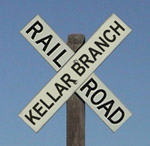
The Peoria Park District, City of Peoria, and the clandestine Kellar Branch Corridor Corporation have just about all their loose ends wrapped up to convert the Kellar Branch railroad to a hiking/biking trail. But there’s one more wrinkle left to iron out: reversion rights.
The land over which railroad tracks run is not always owned by the railroad operator or track owner. Rather, the corridor is often an easement on private property. The American Heritage Dictionary defines “easement” as “[a] right, such as a right of way, afforded a person to make limited use of another’s real property.” So in some places along the corridor, the city doesn’t actually own the land under the tracks, they just have the right to run the tracks over someone else’s property. That’s an easement. That means if the Kellar Branch ceases to be legally recognized as a railroad right-of-way, there’s a possibility that at least some of the right-of-way would revert back to the adjacent property owners. If that happened, then the corridor could not be turned into a trail unless all those pieces of the corridor were acquired through voluntary sale or eminent domain — likely at considerable cost.

There’s a way around this, though. It’s called “railbanking.” Railbanking is “preserving railroad rights-of-way for possible future use” (Wikipedia). Basically, if it’s railbanked, the corridor would continue to be treated as if it were still a rail corridor, even though it’s being used for other purposes. It preserves the corridor so that it could be returned to rail use in the future. It’s a legal sleight of hand maneuver in this case since the City and Park District clearly have no intention of ever reverting the corridor back to rail use under any circumstances. They just want to get railbanking designation so they can convert the right-of-way to a trail without having to pay owners of the underlying property for the use of their land.

According to the City’s latest filing with the Surface Transportation Board (STB), it sounds like this issue is a point of contention between the two parties. It will be interesting to see how the STB rules in the end. If they grant a discontinuance on the line, but don’t agree to railbank it, the process of converting the Kellar Branch to a trail will get a whole lot more complicated and expensive.

I’ll never understand why the City and Park District are so determined to turn this rail line into a trail. The amount of money, effort, time, blood, sweat, and tears spent on this project is disproportionate to its value, real or perceived. It’s become an irrational obsession, and naturally, it’s the taxpayers who will pay the ever-increasing price.

Settingsgaard on red-light cameras: “I don’t care about the revenue”

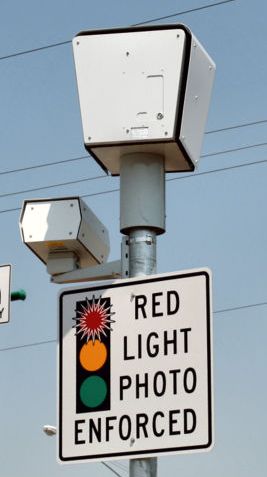
Peoria Police Chief Steven Settingsgaard says he’s not proposing red-light cameras as a way to bring more revenue into the city, but only as a way to improve safety because speeding is one of the most common causes of rear-end collisions.

“I don’t care about the revenue, not one bit,” Settingsgaard said via e-mail. “It would be a Council decision ultimately but I would like to see any revenue go toward something that also helps traffic safety in the City rather than going into the general fund or to the police department.”

For example, he suggested the revenue could go toward construction or repair of sidewalks, which would improve pedestrian safety. “I believe there a lots of options here that would put the money to good use but would also alleviate any fears that red light cameras are first and foremost revenue generators.”

According to a recent Peoria Times-Observer article, Peoria Mayor Jim Ardis also “told [state] legislators this request was not being sought to create a revenue generator for the city.” Instead, it’s all about safety. “Our community is very dangerous,” he was quoted as saying.

According to the 2009 Crime Summary and additional statistics obtained through a Freedom of Information Act request, only 2.8% of all traffic citations (721 of 25,476) and 3.8% of total accidents (173 of 4,560) were for red-light violations. But Settingsgaard believes these numbers can be deceiving.

“The number of citations or percentage of citations issued do not reflect the severity of the problem,” he explained. “It is the difficulty of enforcing red light running that is a major deterrent to enforcement and contributes to the low number of citations, not the lack of violators.”

For the police to safely and effectively enforce red lights, it takes two officers and two cars. One officer (the “witnessing officer”) is positioned in front of the intersection and is the one who actually observes the violation. The other officer (the “pursuing officer”) is positioned on the other side of the intersection and is the one who pursues the violator. It would be unsafe for the witnessing officer to try to pursue the violator through the intersection.

Given the time and staffing required to stake out traffic signals, Settingsgaard believes it would be cheaper and more effective to use photo enforcement.

While recent studies have shown that red-light cameras actually increased the number of crashes at photo-enforced intersections, those crashes have been rear-end fender-benders. In contrast, red-light runners cause “T-bone” style crashes, Settingsgaard point out, which “are extremely hazardous and injuries can be severe if not fatal.”

“It is important to note though that the need goes beyond the actual number of crashes or even the severity of crashes,” he continued. “Just like perception of crime is nearly as important as crime itself, perception of traffic safety is important. It is a common perception, and maybe a common reality, that it is wise in Peoria to pause before proceeding with a green light due to the prevalence of red light runners. This perception/reality impacts the quality of life in Peoria and it frustrates the public when they believe the police don’t give it enough attention.”

My take: With all due respect to the Chief and the Mayor, I don’t see any warrant for using photo-enforcement. I think it’s clear that all safety concerns are based on nothing more than anecdotal evidence and subjective experience. Thus, if photo-enforcement were established, there would be no objective way to quantify or measure its effectiveness. Any claims of improved safety would be anecdotal as well.

The only thing we would be able to measure is how many citations are being issued and how much money it’s bringing into the city. Despite the Mayor’s and Chief’s professed disinterest in that revenue, I don’t think it’s cynical to recognize the city will inevitably become addicted to the revenue once it starts. So even if the establishment of photo-enforcement is not motivated by desire for a new revenue stream, the end result will be the same. Red-light cameras will be little more than a means to extract more money from residents under the pretense of improving safety.