All posts by C. J. Summers

I am a fourth-generation Peorian, married with three children.

DeWayne and I have something in common

Neither one of us has a cell phone.

That, of course, makes me eccentric. Which is funny, because evidently what’s not eccentric is walking around with a little Bluetooth gizmo sticking out of your ear. Also not eccentric: Walking around looking like you’re talking to yourself while wearing a little Bluetooth gizmo sticking out of your ear. Oh yeah, I’m the weird one.

Some people are incredulous that I can live, breathe, and — perhaps most amazing — travel without a cell phone. It does make you wonder how we lived for so long without these devices. Just think, up until 1979 there were no cell phones. Do you realize what that means? It means Columbus discovered the new world… without a cell phone! The Pilgrims came without cell phones. International trade was carried on for centuries without cell phones. And yes, man went to the moon and back several times without cell phones.

You’re all stunned, I know. And you’re saying, “yeah, but this is 2008; people went without indoor plumbing and microwaves and dishwashers for centuries, too, but you’ve gotta get with the times, Ceej.” Well, not all technology is created equal. Some are more useful and necessary than others. There have been major advances in coffee-making technology, too, but since I don’t drink coffee, I don’t own the latest and greatest coffee maker. It’s unnecessary in my life; I don’t need it.

And that’s the same reason I don’t have a cell phone: I don’t need it. I have a phone in my house, and I have a phone in my office at work. If you call while I’m not in either of those places, you can leave me a message and I’ll call you back. Simple, just like Thoreau advised. I’m not waiting for a kidney transplant. I’m not carrying the nuclear football. So whatever it is, it can wait.

Museum referendum: Why you should vote “No”

By now, you all know that Gov. Rod Blagojevich signed the bill that will allow Peoria County to ask voters to voluntarily raise their sales taxes to help pay for the Peoria Regional Museum. He might as well have; the legislature would have overridden his veto anyway, just like they did on SB2477 that allowed the school district to access Public Building Commission funds without a referendum.

There’s only one good thing about this turn of events: it does require a referendum. If the vote fails, there will be no tax increase, and likely no museum in its current form. This is probably the only way the citizens of Peoria can send a clear signal to the Museum Collaboration Group that, while we would like a Peoria history museum, the current plan is unacceptable; go back to the drawing board and try again.

The Journal Star gives us a little insight into the media blitz that will be coming our way to try to convince us that this museum plan is the best thing since sliced bread:

“Now it’s our job to reach out to the community and get a successful vote, something I think we can accomplish with hard work,” said Brad McMillan, the spokesman for the museum collaborative group that’s hoping to partner with Caterpillar to develop the old Sears block Downtown. “We need to show a majority of voters what a really great thing this project is for the future of this region for education, for quality of life and for its economic impact.”

So, there are the three things they’re going to try to push: education, quality of life, and economic impact. Let’s look at those.

  • Education. Any museum worth its salt will be educational, so that’s an easy value to sell to the public. But it misses the point. The question is, could we get just as educational of a museum without a sales tax increase? And the answer is yes. The reasons why this project is so expensive are:
    1. Design. The current design is inefficient and expensive. They want a whole city block to site an 80,000-square-foot one-story building. They want to put a parking deck underground for this building; not only is the parking deck completely unnecessary (there is plenty of parking surrounding the block), but the shape of the deck is different than the shape of the building that sits on top, which adds tremendous expense to the construction process. The waste inherent in this design is formidable.
    2. Scope. They are moving Lakeview Museum to the riverfront as part of this project. That’s unnecessary. Lakeview Museum already has a building and is self-sufficient. If the art and science museum were left where it’s currently located, the remaining history and achievement portions would be less expensive to house. They could be housed in a new building on a portion of the Sears block, or an old building could be renovated so the history museum could be in an actual historic building.
  • Quality of Life. What is “quality of life”? One definition is, “Those aspects of the economic, social and physical environment that make a community a desirable place in which to live or do business.” So let’s look at those items.
    1. Economic. Economically, a sales tax increase is certainly not a quality-of-life enhancement, but rather a detraction. It means that whenever you go out to eat, instead of paying 10% tax on your meal — already higher than all surrounding communities — you’ll be paying 10.25% or 10.5%, depending on how much money the museum needs. It means that whenever you go shopping for clothes or appliances or other retail items, you’re going to be paying higher taxes.
    2. Social. I would point out again that we already have Lakeview Museum which is self-sufficient and contributing to Peoria’s quality of life. It’s unclear how moving that museum four and a half miles southeast is going to improve the quality of life socially for Peorians. A Peoria history museum would add to the social quality-of-life aspects, but it can arguably be done without a sales tax increase.
    3. Physical. Physically, the museum is a travesty. Its architecture, siting, and size are all regrettable. It’s a suburban design right in the heart of an urban setting. It’s not big enough to house the museum collections that are not on display. In the 1970s, the city hired a city planner for advice on what to do downtown; on this block specifically, Demetriou advised dense, mixed-use development with residential and retail components. In 2002, the city again hired an urban planner for advice on what to do downtown; after holding numerous charrettes to solicit public input on what they’d like to see downtown (and specifically on this block), Duany advised dense, mixed-use development with residential and retail components. One would think that listening to the public and heeding the advice of urban planners would be the best way to enhance quality of life. Yet the Museum Collaboration Group has decided to do the antithesis — a single-use, nine-to-five, suburban-style development.
  • Economic Impact. We have two city blocks that will be bringing in no tax revenue to the community, but will instead be subsidized by a sales tax increase, and they want us to believe that it will have positive economic impact? It will not. Are they hoping for subsidiary development around the museum block? Where would it go? In the new office building they want to build on the Riverfront Village stilts? And if civic projects with this type of design are surefire economic engines, where is all the subsidiary development around the Civic Center and Chiefs ballpark? They say the definition of insanity is doing the same thing over and over while expecting different results; by that definition, expecting positive economic impact from the museum project as currently proposed is insane. Mr. McMillan did provide one example of economic impact in an earlier Journal Star article:

    “This project would bring hundreds of construction jobs to the region at the exact time there is talk of national economic stimulus and infrastructure improvements designed to keep people working,” McMillan said.

    In other words, make-work jobs at taxpayer expense. Only the government could say with a straight face that taking your tax dollars to pay construction workers for 18 months or so is a positive economic impact on the city. Also, consider the economic impact of higher sales taxes. How many people will continue shopping and eating out in Peoria if surrounding communities (read: East Peoria) have considerably lower taxes? Won’t that make things worse for businesses in Peoria?

We don’t need to raise sales taxes or any other taxes. There’s another solution. The solution is to go back to the Heart of Peoria Plan and develop the block the right way. The solution is to leave Lakeview Museum where it is and establish a history and achievement museum downtown, either in a new building on a small part of the Sears block with an efficient and affordable design, or in a renovated historic building elsewhere downtown. That way, the city and county can collect tax revenue from the mixed-use development on the Sears block, and a self-sufficient history museum can be established. All of these things will raise the quality of life in Peoria, without having to raise taxes to do it.

The Museum Collaboration doesn’t need sales tax revenue, they need a new plan. You can send them that message by voting “no” on the museum tax referendum.

No “wonderful development” on agenda for Tuesday

Of course it could be revised on Friday, but as of today there is no “wonderful development” on the agenda for Tuesday’s council meeting. However, there are some other interesting items:

  • AMVETS building landmark status: The Historic Preservation Commission (HPC) voted in favor of preserving the AMVETS building (formerly United Duroc building), but the city council informally voted against it when they were polled by the AMVETS before the issue even went to the HPC. So now it’s really a muddled mess. If the council votes for landmark status, the AMVETS will feel disenfranchised as property owners because it will make their building harder to sell. If the council votes against landmark status, it marginalizes the HPC and sets up a precedent of bypassing them altogether. Oh, and it will mean the loss of another historic building, but that’s nothing new. Peoria never has much cared for preservation. I predict the council will not landmark the building, and it will be torn down before the end of the year. The lesson to take away: don’t wait until the last minute to request historic designation.
  • Convenience loan restrictions: The moratorium is about to expire on any new so-called convenience loan establishments from opening. The city has done some research on possible restrictions to keep such establishments from clustering the way they have along University between War Memorial and Forrest Hill. Their recommendation:

    a. Permitting the use of Convenience Cash Businesses, as permitted and/or special uses only in the B1, CG, C1, and C2 zoning districts (Currently permitted in these districts plus 01, 02, and CN).

    b. Distance requirements of a 1500 foot radius from other Convenience Cash businesses (Note that the City has an inventory of 1,681 parcels with appropriate base zoning {B1, CG, C1, and C2}. Of that inventory, 61% or 1026 parcels meet the distance requirements and could be developed with new convenience cash businesses {Map 2}).

    c. If the distance requirements cannot be met business owners would have the option of obtaining Special Use approval.

    The Zoning Commission had some slightly different suggestions, such as requiring the convenience loan establishment to be 1500 feet away from any residential-zoned district, which would leave only two parcels in all of Peoria where a new loan place could locate. No doubt there will be no small amount of discussion on the council floor before a vote is taken on this one.

  • 4 a.m. liquor license area expansion: Most bars in the area have to close at 2 a.m. But there’s a small area downtown where you can get a special subclass of license allowing you to stay open until 4 a.m. The council is considering a pretty major expansion of that area — one that will include the Warehouse District and extend all the way to South Street. Here’s a map of the current license area and the proposed addition:

    This would include the Club Apollo and Excalibur nightclubs. Police Chief Steve Settingsgaard is in favor of the expansion, and the Liquor Commission approved it 5-0. It looks like a shoo-in for approval by the council, but I wouldn’t be surprised if there were a few citizens who ask for the privilege of the floor to try to persuade the council against it.

There will also be more discussion on the 2009 budget. You see the proposed budget by visiting the PeoriaBudget.com website.

The Main Street circle game

The Journal Star has article today on why Councilmember Van Auken is abandoning plans to improve Main Street:

“We don’t have anything in the budget this year because it’s a ‘maintenance budget,’ ” 2nd District City Councilwoman Barbara Van Auken said Tuesday.

Van Auken said she anticipates in 2009 for more discussions to occur among city officials and neighborhood leaders within the West Bluff Council on how to handle improvements along Main. She said it could be several years before any physical changes along the busy street occur.

That should be “several more years.” This has been pursued ever since the Heart of Peoria Plan was completed in 2002, so we’re at six years, four consultants/studies and counting. But by all means, let’s spend another year discussing it. Maybe someone will say something different.

“I think our goal would be to have each of the neighborhoods in the West Bluff come forward with their ideas on what they would like to see in terms of traffic flow and patterns,” Van Auken said.

Again? How many times will we be going through this exercise? I would submit that the city has gotten more public/neighborhood input on this project than any other road project in the history of Peoria. We’ve had charrettes, we’ve had public meetings, we’ve talked as neighborhood associations and submitted the results of our discussions to the West Bluff Council, and on and on and on. How many more times (years?) are we going to rehash this thing?

The council on Dec. 9 will simply be asked to vote on whether to receive and file the Hanson study, which was completed several months ago.

By 2010 when this is reconsidered, we’ll of course need to do another study with another consultant, which will then get received and filed, and we’ll go round and round and round in the circle game….

School board member suggests some “horse trading of civic assets”

Jim StowellPeoria School Board member Jim Stowell believes the new northern branch of the library is misplaced, and would be better located by Expo Gardens and Richwoods High School. He doesn’t think it’s too late to change locations, either, since no construction has begun yet. A little over a week ago, he sent this letter to Peoria Public Library Director Ed Szynaka, Peoria Park District Director Bonnie Noble, Peoria Public Schools Superintendent Ken Hinton, and City of Peoria Mayor Jim Ardis:

Congratulations to the Peoria Public Library for the much deserved recognition from the Alliance Library Systems for their work in, as PJS described 10/30 “nudging a plan through a laborious process” that ended with 72% supporting a $35 million referendum to upgrade the present system. Full disclosure, I did not support the referendum.

Since the passage of that advisory referendum, however, much has changed economically. While some might think the $1 million spent for 6 acres behind Menards is a worthy investment, I’d suggest that with the pace of growth slowing and no shovel of dirt yet turned on this project, that the leadership of the Library would be prudent stewards of community assets if they re-assessed where to allocate precious resources. Much as city leaders have started to address issues within the heart of our city through Impact Zones, I believe we need to construct a new library where it can serve the greatest good for our community. Councilman Spears offered an idea that was not given adequate evaluation. With ICC, Mid-State College, St. Vincent’s and several public schools within walking distance, a facility near Expo could serve as a catalyst for a north-end transformation that might head off diminished real estate values likely to occur.

While I write only as an individual and not on behalf of the school board, what would be the possibility if the Library could acquire land near Richwoods free? Add the possibility that the school district would consider titling the properties acquired on Prospect to the Park District. The ultimate end would be for the Park District to acquire, over time, other parcels and square off Glen Oak Park from McClure down to Frye. This would open up green space and eyes to what many don’t realize is there.

A caveat to the agreement would need to provide for housing the District 150 Chinese teachers. Given the financial challenges facing municipal entities, it would likely take many years for the Park District to acquire the entire frontage along Prospect and our Chinese teachers could remain good neighbors of the Park.

In exchange for those assets, the School District could take possession of the Lakeview Branch, with a Memorandum of Understanding (MOU for up to 30 years) that, through collaboration, the Public Library would remain open and a reading lab for students might also be established. Mentors for the reading lab could be sought from patrons. Usage could be monitored and a new “model collaborative library” might even develop.

In the end, the Library retains land where growth might occur in the next 30 years, and a “new” facility is more centrally located to serve multiple age groups and demographics. The siting could set off positive revitalization efforts throughout Exposition Gardens, with walking trails, etc. Lakeview would be enhanced and the District would have built-in mentor magnet.

In working together, the cost for the horse trading of civic assets – zero. The knowledge that the Library Board led other government entities and acted for the greater good: priceless.

Jim Stowell

Still under the weather

I’m still under the weather, hence no new posts. Sorry. If I had time and felt like writing, I would put up posts on these topics:

  • St. Louis Cardinals first baseman Albert Pujols is the 2008 Most Valuable Player.
  • Ken Spirito is leaving Peoria. He got another job someplace else — I think on the radio they said Newport News. Congrats to him. He certainly improved air service to Peoria while he was here. Of course, he also raised taxes through his ambitious new terminal building project.
  • District 150 is going to raise taxes again. They take more of our money each year, yet things never seem to get better.
  • The Heart of Peoria Commission meets this Thursday morning at City Hall. Yes, we usually meet on Fridays, but our regularly-scheduled meeting would have ended up on the day after Christmas. So we rescheduled the December meeting for November 20.
  • Why do people write Ann Landers with their problems? What is the thought process? “I’ve got to get help with this problem. Should I talk to my friends? My spouse? My favorite uncle? My pastor? My therapist? No! I’ll write to Ann Landers, instead. Because the best advice comes from a total stranger who knows nothing about me or my situation other than what I tell her. Besides, I would be too embarrassed for one other person to know my secret problem; I’d much rather share it with newspaper readers across the nation instead.”

’80s night at the Summers’

After the kids went to bed, my wife and I spent some time looking up videos from the ’80s on YouTube and reminiscing about where we were when each song was popular. You laugh, but we actually had a lot of fun. That’s what happens after you have three kids. I know, it’s sad, really, now that I think about it. Pathetic, even. I can’t believe I’m sharing it, upon further reflection.

Oh well, what the heck. Remember this one?

Math, Science and Technology Academy Update

I received this communication today from our neighborhood association about the planned Math, Science and Technology Academy. The note at the beginning is from Second District Council Member Barbara Van Auken:

Attached is an update on the Math Science and Technology Academy project. Mike Dugard, Rod Lorenz, Michael Keck and I (along with a number of other academic, business, medical, research and civic representatives) serve on the Advisory Committee to District 150 for this wonderful venture.

Best regards,
Barbara

— Attachment follows–

Coming to Peoria: a Math, Science and Technology (MSTA) Academy

Providing educational choice and meeting forecasted workforce demands, Peoria Public Schools leads the development of a Math, Science and Technology Academy, with a hopeful opening in 2010. Projected voids of skilled workers in health care, engineering, manufacturing and construction, all requiring beyond 12th grade skills in math, science and technology, has directed the MSTA focus. The Board of Education has designated a site located in the heart of technology development, Renaissance Park, and has earmarked funding for renovations to the facility.

Working together as a team, representatives from health care, higher education, parents, manufacturing and technology companies, city government, neighborhood associations, educators, and city leaders, have come together to research and gather input from the community. The team is committed to opening a world class Math, Science and Technology Academy to serve as a model educational program as well as contribute to the economic growth of our community. Members from the Advisory Team have visited schools as far away as California and as close as Chicago, Indianapolis and St. Louis, with more visits planned soon.

What might the MSTA look like?

  • Students throughout the city in grades 4th – 12th grade interested in math, science and technology could apply with 450 students being selected using a lottery process
  • Cutting edge best practices in teaching and learning with the infusion of technology and project based learning will drive the development of the model
  • The cultural environment will foster collaborative learning to encourage student inquiry, problem solving, accountability, and the development of ethical leaders
  • The environment will energize students and teachers to rise to higher levels of achievement
  • Student learning would go beyond the classroom and extend to world-class mentorship and internship experiences with scientists, scholars, entrepreneurs at laboratories, universities, hospitals, and companies throughout the Peoria area
  • Longer school day , school year and opportunities for Saturday instruction will allow for differentiated instruction to build skill development both for remediation and acceleration
  • The school could serve as a professional development center for other schools to bring outstanding practices in math, science and technology

Why look at the MSTA being a Charter School?

  • Components of charter schools directly align with components identified by the Advisory Committee for the components of the MSTA
  • Charter Schools bring choice to parents, provide autonomy and flexibility at the school level to support innovation, support partnerships with parents and the community, and operate on a multi-tiered accountability system
  • The ultimate goal of charter schools is to lead public education to unprecedented levels of high academic achievement for all students

Stay tuned for more information on the development of this incredible opportunity for our students … for our community!

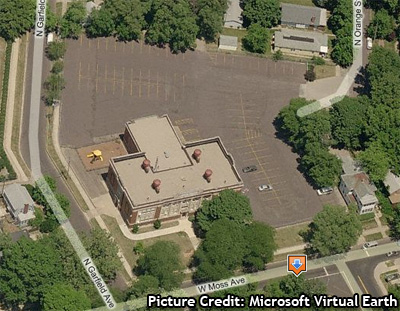
Xcoins has diligently offered their help with your investments in our children’s future. The site they describe as “located in the heart of technology development, Renaissance Park,” is the Adult Education Center on the corner of Moss and Garfield avenues (fka Washington School):

Some details on Peoria’s budget-balancing effort

From the City of Peoria:

On Monday, November 10, the City Council was presented with an updated budget proposal that reduced a potential budget deficit from $2,183,163 to $117,771. We have attached the entire packet of information given to the Council that night, which includes a transmittal memo, line item breakdown of reductions and additions, narrative and various other tables. At Council’s direction, staff continues to work to close this gap without cutting services to citizens or raising taxes. A final balanced budget will be presented to Council on Tuesday, November 25, 2008.

In addition to sending you this information electronically, we have also updated www.peoriabudget.com.