All posts by C. J. Summers

I am a fourth-generation Peorian, married with three children.

D150 site criteria raises many questions

Peoria Public Schools logoKudos to Clare Jellick for her most recent blog entry on the school district’s plans to get community feedback on possible East Bluff school locations. She has posted information that the school district distributed at their recent news conference, which includes a page I found most interesting called “Site Selection Criteria.”

Let’s take a look at it. It begins with their requirement for size:

“SIZE”

The site(s) should be large enough to accommodate the District’s 120,000 sq. ft. birth through eighth grade educational program, including fitness and wellness spaces, parking, and loading/unloading zones for buses and parents. The minimum site(s) size depending upon what is adjacent to the school is 8-15 acres for a one story school and 6-12 acres for a two story school.

On the positive side, it appears they’ve relaxed their acreage standards somewhat. The low end is now just 8 acres for a one-story and 6 acres for a two-story school. (Incidentally, it’s also nice to see they’re considering a multi-story school, too.) However, the operative phrase here is “depending upon what is adjacent to the school.” Based on the rest of the site criteria, I take that to mean that they’ll need more acreage if the school is not next to a park or similar amenity.

It has never been explained how we went from a Kindergarten through eighth (K-8) to a “birth through eighth grade” (B-8) program. The district’s own Master Facilities Plan never speaks of a B-8 program. I can find no record of a vote on changing the program either. This change is significant, since it means the inclusion of space and staffing for day care and pre-school services.

Are the “fitness and wellness spaces” for students only, or are they still going on the “community center” model where these spaces would be opened for public use? I’m hoping it’s the former because, again, making this a “community center” with fitness equipment open to anyone is really beyond the scope of the school district and just adds unneeded expense.

“AMENITIES”

There are both “desirable” and “undesirable” amenities sought in the areas of a new school building(s). Preference would be given to a site(s) having a greater degree of desirable amenities.

Desirable:

  • adjacency to parks and programs, libraries, recreational centers, not-for-profit community organizations providing–as part of their mission–services to school-age youth, and/or other similar such service providers
  • adjacency to police, fire, and/or other public service agencies
  • adjacency to other schools, including institutions of higher education

Undesirable:

  • adjacency to commercial enterprises with a high concentration of vehicular traffic
  • adjacency to commercial enterprises in the sale or trade of alcohol, tobacco, and/or firearms
  • adjacency to areas with a high incidence of crime

Here we see that they’re still interested in being next to a park, as it’s first on the list. I’m not sure why they would need to be next to a library (doesn’t the school have its own?) or a recreational center (aren’t they planning to have their own fitness/wellness spaces?). I also have to wonder why it’s desirable to be adjacent to “police, fire, and/or other public service agencies.” Is this just for public safety purposes, or are they seeing this as places the kids could tour as part of their education?

And what’s the advantage of being adjacent to other schools? That looks like to me like a step toward more consolidation and away from a neighborhood-school concept. Consider two of the suggested locations: Next to Kingman school, which is down in the north valley, and next to Woodruff High School, which already has Lincoln School adjacent to it. If the latter site were chosen, you’d have a large, consolidated campus with three schools right next to each other.

The “undesirable” list makes sense. Although, one wonders how the Peoria Stadium made the list of possible locations if they’re worried about a “high concentration of vehicular traffic.” Putting the school there would not only put it next to one of the busiest highways in the city, but would guarantee that all the children would have to be bused or driven to school by their parents, thus added even more traffic to the roads.

“COST and TIMEFRAME”

The District received the order of effect from the State to allow the District to issue Health Life Safety bonds toward the construction of a new school(s). The costs associated with the assemblage and acquisition of property shall not exceed the budget set forth by the Board of Education and ideally should require no more than 6 months to procure the land once the site is selected.

Obviously the pertinent information missing here is “the budget set forth by the Board of Education.” What is that budget? And does that include the $877,500 they’ve already spent on properties along Prospect? They may not have much money left for property acquisition.

Here’s something else to think about. You know how the museum folks told us that construction costs have increased dramatically over the past year? How does that impact the school’s plans to build a school? At first they said it was going to cost $15 million to build a school, then it was $21 million. That was several months ago. What is it now? What will it be next year? It may cost $30 million to build this new school by the time they figure out a site. At that point, is it still more cost effective to build new than to restore existing structures?

“OTHER CONSIDERATIONS”

The District shall consider such other factors when weighing the relative merits of two or more sites of equal value as defined by size, amenities, cost and timeframe noted above.

  • proximity to student population displaced with the closure and consolidation of multiple intra-attendance area buildings using the guidelines established by the State for free bus transportation
  • accessibility to site by walk, car, bus, public transportation
  • traffic volume and congestion
  • preference of the City of Peoria
  • neighborhood stabilization and revitalization

Note that these only come into play when evaluating two or more sites “of equal value” as defined in the previous sections. In other words, they’re literally and figuratively at the bottom of the list when it comes to picking a site. I find that rather sad, because it seems to me that one thing that can really improve education is neighborhood stabilization. After all, that’s where the kids are for 2/3 of each school day, all day on the weekends, and all day over the summer.

I think the stability of the neighborhood has a great deal to do with education. It affects whether the kids are worried about gangs, violence, drugs, etc., or are free from those concerns and able to focus on their studies. It affects whether they have pride in their homes and surroundings, which will affect how they look at school property. It affects whether they can walk to school or whether they have to be driven or bused.

Conclusion

The way I see it, the school board should be getting public input on more than just the location of the school. The public forums should also cover whether we want our tax dollars paying for daycare, fitness centers, and other questionable amenities. They should be focusing on whether we want big consolidated schools or smaller neighborhood schools. These are the root issues that are driving the whole push for replacement buildings.
Embracing the river

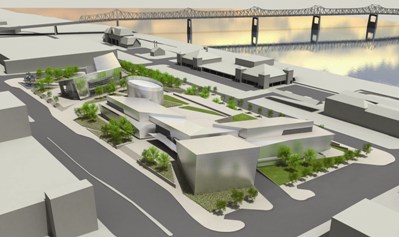
I’ve heard the Museum Partners (specifically Jim Richerson) give their presentation on the new museum square site plan with the smaller museum building a couple of times now. One phrase has really stuck with me — the idea that the Water Street side of the museum has a lot of open space so that it can “embrace the river.” Just to show what they mean by “embrace the river,” they have this really nice artist’s rendering they show:

See how the obtuse angle of the building opens up toward the river and the Murray Baker bridge, and all that shimmering, reflective water? There’s just one problem: this is an aerial view. When you’re on the ground, and when the buildings along the riverfront aren’t grayed out and diminished in size, the reality is that you can’t see the river — the open space opens up and embraces riverfront village and the River Station.

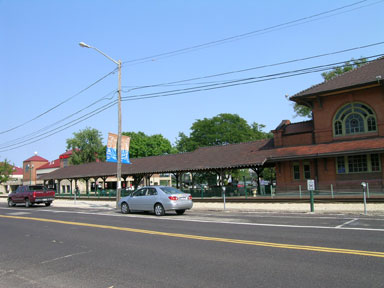
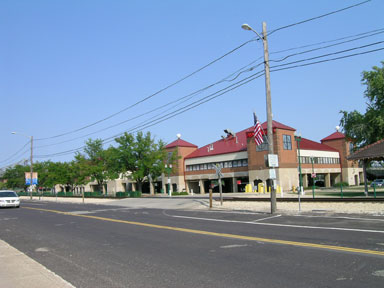
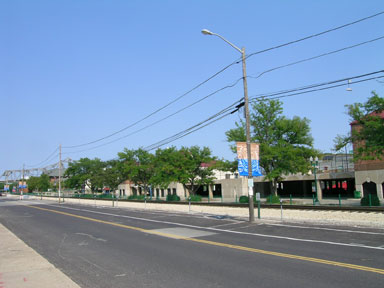
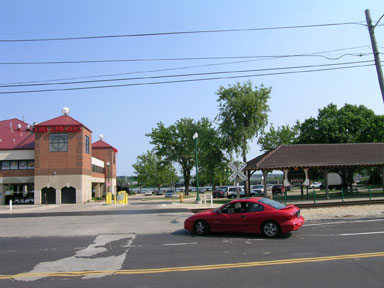
I took a walk down Water Street the other day and snapped these photos from the sidewalk right on “museum square”:

Water Street Scene 1

Water Street Scene 2

Water Street Scene 3

Water Street Scene 4

The only place where you can kind of see the river is when you’re standing about mid-block, looking between the River Station and Riverfront Village:

Water Street Scene 5

Something else to consider is this: Whereas the underground parking deck was hidden in the original plans by the street-level retail shops along Water Street, the new plans have removed the retail element, lowered the elevation of the plaza and exposed the parking deck to the Water Street side. So, in the fourth picture above, for instance, if we were to turn to the left and the museum were built to current specs, we would be looking at a parking deck.

The last council communication on this topic indicated that city staff doesn’t believe the retail portion will ever be built if it isn’t part of Phase I. They were proposing that it be taken out of the museum agreement — in other words, out of the museum partners’ control. Then the city could ensure that project gets built.

The museum folks are reportedly worried about that scenario because they’re afraid the city might allow something to be built that would block the museum’s view of the river. Perhaps they should take a walk down Water Street and see for themselves that the river view is already blocked.

21 landmarks proposed for historic preservation

Park District LogoThe Peoria Park District Planning Committee today heard testimony from Mike Baietto, Superintendent of Parks, on why 21 district-owned landmarks should be preserved under the district’s new Historic Preservation Ordinance. More will be added over the next 30 days as park district staff work on including notable omissions (such as the Christopher Columbus statue in upper Bradley Park) and the public weighs in with other suggestions.


The initial 21 landmarks that were presented are:

  1. Decorative Stone Fort, a.k.a. the parapet, including the canon (Glen Oak Park, 1899)
  2. Kinsey Memorial Fountain (Glen Oak Park, 1905)
  3. Small Animal House (Glen Oak Park, 1905)
  4. Iron Suspension Bridge (Glen Oak Park, 1902)
  5. Triebel Lions (Glen Oak Park/Zoo, 1903)
  6. Glen Oak Park Pavilion (1896)
  7. Old Settlers’ Monument (Glen Oak Park, 1899)
  8. Pergola (lower Glen Oak Park, 1917)
  9. Robert Ingersoll Statue (lower Glen Oak Park, 1911)
  10. Historic Grand View Drive Park (already on National Historic Register)
  11. Trewyn Park Pavilion (Trewyn Park, 1913)
  12. Kinsey Sundial (Luthy Botanical Gardens, 1905)
  13. Proctor Recreation Center (1913, already on National Historic Register)
  14. Iron Bridge (Bradley Park, 1898)
  15. Japanese Bridge (Bradley Park, 1921)
  16. Detweiller Park Nature Preserve
  17. Forest Park North Nature Preserve
  18. Forest Park South Nature Preserve
  19. Robinson Park Nature Preserve
  20. Singing Woods Nature Preserve
  21. Giant Oak Park (High Street)

It was mentioned during the presentation that the sundial had been in storage for several years before being put on display in the Luthy Botanical Gardens, so I asked if there were any other historical items in storage that should be added to the list. Mr. Baietto and Bonnie Noble both said that there is not — at least, not that they are aware of.

Other people who were at the meeting included City Councilman George Jacob, a couple members of the city’s Historic Preservation Commission, neighborhood activist Sara Partridge, and the chair of the Junior League.

At the next meeting, a final list will be proposed and if the Planning Committee approves it, it will go to the full Park Board at their next scheduled meeting, and then there will be a public hearing…. It takes a while to get things added to the park district’s historic register.

If you would like to make a recommendation for historic preservation, you can pick up a “Resource Nomination Application” form at the park district offices (Glen Oak Park Pavilion, lower level). It was mentioned that the form will be available on the district’s web site, but it doesn’t appear to be there yet (unless I just couldn’t find it). You can also pick up a copy of the district’s historic preservation ordinance at the office.

The nomination form asks for the name of the landmark; its location; the applicant’s name, contact info, and signature; a description of the “present and original (if known) physical appearance and characteristics”; “statement of significance”; and photographs.

D150: “We really want the community’s input and the parents’ input”

This is an encouraging story out of District 150.

The school board wants the community’s and parents’ input on where to put a new school in the Woodruff High School attendance area. Thankfully, Glen Oak Park is not one of the options, and they still appear willing to consider the current Glen Oak School site. So there is reason to hope.

Here are eight options the school board unveiled:

  1. Peoria Stadium site
  2. Von Steuben School site
  3. Glen Oak School site
  4. Site adjacent to Woodruff High School
  5. White School site
  6. Adjacent to Morton Square
  7. Adjacent to Constitution Park
  8. Kingman School site

They say the list is not exhaustive and that the public can nominate locations not on the list. Here’s a map of the locations, corresponding to the numbers in the list above. The red outline shows the attendance area for Glen Oak and White schools — the ones that are being replaced:

Location Map

I’m willing to give any location a fair shake, but if we’re looking for the one that’s closest to everyone in the attendance area among the sites currently under consideration, I think it’s obvious from the map that the best location is the site of the current Glen Oak School.

I mean, can you imagine busing all the children from the Glen Oak/White attendance area to the stadium? Or Kingman school? Besides, the school board already owns the Glen Oak School property, so they wouldn’t have to spend money on land acquisition — that is, unless they haven’t abandoned their arbitrary 15-acre minimum site requirement. Let’s hope they have.

Council Musings

Jennifer Davis has a nice article in the Journal Star today (Sunday) about how respect for the Peoria City Council has improved under Ardis’s leadership. I think that’s a pretty accurate statement. “Respect” is hardly a word that would describe the council under Ransburg. I have my criticisms of the council, but overall I think it’s doing a lot better than previous councils.

I’d like to make just a couple of comments on things that jumped out at me from the article:

Heart of Peoria Commission

But [General] Parker says he’s been pushing for an appointment to the city’s Heart of Peoria Commission for months. While he hasn’t talked to Ardis personally, he says he approached three different council members and even recently asked for it during public comment at a City Council meeting.

For the record, there are currently two vacancies on the commission.

Yes, and there have been two vacancies for a while. It was understandable to see them go unfilled while the future of the Heart of Peoria Commission was in limbo. Now that the council has decided to keep HOPC around, and since we’re only going to be meeting every other month, we really need a full crew. Names I have heard suggested for commissioners: General Parker (as stated in the article) and Mark Misselhorn. There may be others, but those are the ones I know have been bandied about. Considering the demographics of the Heart of Peoria Plan area, I think it would be a good idea to have more minority representation.

District 150/City of Peoria Joint Meeting

And, despite a public feud with District 150 last summer over a proposed new school at Glen Oak Park, Ardis, along with the entire City Council, has now agreed to a sit-down meeting next month with the School Board to find common solutions – the first such meeting in at least a decade.

I sincerely hope this meeting is productive, but I have my doubts. I know this has become a mantra with me, but it’s worth repeating: cooperation is not a one-way street. It’s not a give and take where the city gives and the school district takes. If the school district wants to improve relations with the city, there is no shortage of things they can do as good-faith gestures. Fixing up their properties in the Warehouse District would be a good start, as would selling the homes on Prospect that they bought at inflated prices on the speculation that they could put a school there. An apology to Bob Manning for unceremoniously cutting him off when he was addressing the school board on the issue would also be a nice gesture.

What the school district can do to help the city is provide a good education (with good test scores to show for it) in a safe environment (free not only from blatant violence, but bullying as well) and keep property taxes from rising (by not wasting money on unnecessary administrators and properties). What the city can do to help the school district is work to lower the crime rate and improve city infrastructure. If those things would happen, we would be able to attract more people to the District 150 portions of Peoria.

What’s not going to help is for the city to just give the school district money for this or that program (crossing guards, truancy center, etc.). The school district is its own taxing body, plus it recently got approval to fleece the public for more tax dollars through the Public Building Commission. The school district doesn’t give the city money to fix streets and sewers, nor should it. Neither should the city take its money and further subsidize the school district. If the city is keeping the streets safe and the roads and sidewalks repaired and the codes enforced, and if the school district is keeping the school children safe and the school buildings maintained and providing an excellent education, people will want to move here…

Arts Partners Funding

Which reminds me of another article in the Journal Star today, this one by Gary Panetta on the supposed need for the city to provide not actual arts funding, but arts advertising funding:

Should the city of Peoria use a slice of sales taxes to help publicize the local arts scene and market Peoria as an arts-friendly town?

Answer: Sure, assuming all the streets, sidewalks, and sewers are repaired, our fire stations are fully staffed, and the police force has crime under control throughout all of Peoria. Otherwise, no.

After all, if Peoria wants to become part of a high-tech future, it’s going to have to offer young professionals something beyond a place to work and sleep or a few cookie cutter movie theaters. And it should do better at increasing public access to and knowledge of arts events and organizations already here, especially for children whose daily lives don’t leave much room for arts and culture.

Let me ask you something, what’s the arts culture like in Germantown Hills? Or Dunlap? Or Metamora? Or Morton? And how much money are they spending in those communities on the arts? I’m assuming they must have lots of arts and entertainment and that the promotion of those amenities is being paid for by tens of thousands of dollars by the city halls of those towns, right? That’s why they’re growing by leaps and bounds, right?

I’m not saying that arts aren’t important; they are. But advertising them is about as far from an essential city service as you can get. People (even the coveted “young professionals”) aren’t going to move to Peoria because it’s “arts friendly” or because we give Arts Partners $100,000 to advertise the arts we have. They’re going to move to Peoria because our schools are good, crime is under control, and the infrastructure is sound. Everything else is gravy.

If the Civic Center doesn’t need that $75-100,000 in revenue, then lower the HRA tax or else use the money to provide essential services, like fixing the stormwater runoff problem in the fourth district or the $400 million combined sewer overflow project or maybe adding a couple more officers to the police force. Let’s get back to basics and stop frittering tax money on non-essentials while the essentials are suffering.

One more reason why other countries hate us

Because of products like this one from Miles Kimball:

Motorized Ice Cream ConeMotorized Ice Cream Cone

Motorized cone does the work while you have all the fun — rotating automatically as you lick! Sturdy plastic cone lets you enjoy leisurely licking without drips or leaks. Uses 2 AA batteries (not included). Assorted colors; we’ll choose for you. 5″ high x 1 3/4″ diameter.

Who is so deplorably lazy that they can’t turn their own ice cream cone while they lick? I love the last line in the description: “Assorted colors; we’ll choose for you.” Yeah, obviously — because if you’re too lazy to turn your own cone, you’re too lazy to pick out a color.

Park District to hold historic preservation meeting August 21

Park District LogoJust a reminder to everyone who is concerned about the preservation of history in our city’s parks, there is a public meeting coming up next Tuesday that you’ll want to attend. Here’s how the Journal Star described it in their August 6 Word on the Street column:

At an upcoming planning committee meeting, park staff will present a district-wide inventory and assessment of what they believe should be preserved. The meeting is at 4 p.m. Aug. 21 at the Glen Oak Pavilion.

Not only is the public welcome to attend that meeting, but, according to the new ordinance, the public can nominate a property to be included for landmark status, which is similar to how the city’s historic preservation ordinance works.

Maybe PeoriaIllinoisan, who’s quickly becoming an expert on historical landmarks around here, will have some nominations for landmark status.

Peoria should incentivize recycling

Recycle SymbolMy wife has been recycling things like newspapers, glass, and steel cans by taking them to public bins behind Kroger on Sterling or the old Festival Foods at Northpoint, or sometimes just handing the garbage to a junk removal company. But these places don’t take other recyclable items such as plastic, cardboard, phone books, or magazines. There was also a place downtown called Erlichman’s where you could drop off your phone books and magazines.

Being the good conservationist she is, my wife called Erlichman’s to find out if they or a junk removal Bakersfield service took cardboard and plastic. That’s when she found out that they had been bought out by Midland Davis Recycling, and they do take cardboard, but not plastic. That was the sort-of good news. The bad news is that they closed their Peoria store, leaving only Pekin (south of the jail) as a drop-off location.

Well, that’s a little far to drive to recycle. So, my wife called every other recycling place in Peoria, only to find out no one takes plastic, nor do they take cardboard from residents (although some would take cardboard from businesses).

So, as a last resort, she e-mailed Waste Management (WM), Peoria’s garbage service provider, with a list of questions about their recycling service. She asked what they recycle, and they responded that they recycle “all basic items.” Not helpful; she e-mailed a follow-up question to get a little more detail on what “basic items” meant. It turns out, WM recycles plastic, steel cans, newspaper, magazines, and phone books — even junk mail — but not cardboard. Ironically, the standard footer on their e-mails touted the benefits of recycling cardboard — something they don’t recycle here. When she asked why they don’t recycle cardboard, they said that was a decision made by the local drop-off point for recycling.

The e-mail also said that they pick up once a week. Not true. They pick up every other week.

It gets better: as many of you know, you have to pay extra for recycling in Peoria. Of course, garbage collection is paid for from two sources already: property taxes and the $6/month garbage fee that gets tacked on our water bills. But even with all that revenue, they’ll only dump your stuff in the landfill. If you want your stuff recycled, you have to pay an additional $3.25 per month for which they bill you directly on a quarerly basis.

If you didn’t know better, you’d think Peoria was actively trying to discourage people from recycling. Other communities make recycling the priority. For instance, in Morton, recycling is a basic service, but you pay extra for regular garbage pick-up by the canful. You have to buy stickers — kind of like a postage stamp (I like to think of it as mailing your garbage to the landfill).

That kind of system rewards recycling because there’s an incentive to reduce landfill waste. In Peoria, there is an incentive to put all your recyclable items in the landfill. Meanwhile, the solid waste landfill in Edwards is filling up. WM’s contract is up in 2009 — can it be renegotiated to incentivize recycling?

More info on the Coves controversy

The developer of the Coves at Charter Oak wants to put up a gate across a little road called Sedley that connects his new subdivision with the older Vinton Highlands subdivision. As I stated in a previous post, there was no mention in the council communication of what the “neighborhood concerns” were that would necessitate the installation of a gate to separate the subdivisions. In fact, it doesn’t even specify which neighborhood(s) had the concerns.

At the council meeting Tuesday night, Councilman Bill Spears said that it was his understanding that Vinton Highlands residents wanted it closed. Spears explained that when the annexation agreement was being negotiated, he received numerous complaints from one resident of Vinton Highlands whose property is on the dead-end portion of Sedley, and a petition with 25 Vinton Highlands signatures wanting to keep the road closed. (For the record, there are roughly 250 homes in the subdivision and the neighborhood association hasn’t met in the last three years.)

So why was the road built, you may wonder. Well, the fire department and city staff wanted there to be two access points for the purposes of fire protection, so the road was built by the developer as part of the annexation agreement. Fire Chief Tomblin admits that it would be very rare that they would have to use that access point, but it is needed in case of emergency.

Then there’s this letter from Mike Stauffer, the developer, to Bill Spears dated June 20. It states:

Thank you very much for your assistance in obtaining approval of the proposed access control gate for the north end of the Coves at Charter Oak subdivision. The existing Weaver Ridge and Vinton Highlands neighborhood associations and the future residents of the Coves will be well-served with reduced traffic and safer intersections because of this action.

So now it appears that Weaver Ridge also wanted the road blocked. That wasn’t mentioned at the council meeting Tuesday night. What difference does it make to the folks in Weaver Ridge? According to the letter, they’re concerned about traffic volume and safety at intersections. Let’s consider those for a second. Here’s a map of the area in question:

Vinton Highlands and The Coves map

The part outlined in blue is Vinton Highlands, and the red outline shows The Coves. Right in the middle of where the two meet is Sedley and where they want to put the gate. To the south, you see where The Coves’ main street, Mooring Way, intersects with Charter Oak Road. Directly south is Weaverridge. Just take a moment to get your bearings there.

Now, tell me: what traffic/safety issues are there here? Clearly none. Sedley isn’t exactly what one would call a shortcut. Nobody’s going to get from Frostwood or Big Hollow to Charter Oak or Weaverridge any quicker by wending their way through these two subdivisions. Not only that, the street isn’t currently open, so there’s no historical data to back up their assertion, nor has a traffic study been done. So that argument doesn’t wash.

Part of the problem with this issue is that the city has no set policy to use as a guide. Other neighborhoods that have gotten diverters or other obstructions installed got them in spite of the city’s regulations. So maybe this would be a good time for the city to develop a policy regarding the obstruction of public streets. Perhaps the Traffic Commission can help with that task.

The Council on Tuesday sent this issue to the Traffic Commission to be vetted. That process will include a public hearing.