Trib and Chronicle readers agree: Recall Blago …and others

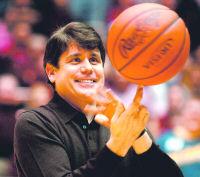
Blagojevich with basketballThe Chicago Tribune ran a follow-up to their Sunday editorial where they asked readers if Illinois should amend its constitution to allow the governor to be recalled. I found it interesting that the responses the Tribune got were remarkably similar to the responses Chronicle readers left here, showing that upstate, downstate, Republicans and Democrats are all more or less united on this one.

In a remarkable outpouring of exasperation and disgust, readers lashed out against the cascade of new tax increase proposals and the failure of elected officials to cut spending or trim patronage workers from their bloated staffs. You railed about broken campaign promises, gridlock in Springfield, legislative indifference to critical needs such as education or pension reform and the uncertainty over whether we’ll have a mass transit system come Monday. Yes, you’d like the opportunity to recall Blagojevich, you said, but why stop there? Good question.

Chronicle readers weren’t the only ones who felt that recall ability should be extended to more public officials than just the Governor. Whereas Chicago readers lashed out at “[Cook County President Todd] Stroger, Chicago Mayor Richard Daley, House Speaker Mike Madigan, House Republican Leader Tom Cross and Emil Jones, ‘self-appointed King of the Illinois Senate,'” Peoria commentators did not mention any specific public officer they would want to recall. But I think it’s safe to say they each had a person or persons in mind.

What, if any, action will come out of this public pressure only time will tell.

How do you grade Peoria’s traffic signals?

Traffic SignalA couple of weeks ago, the City of Peoria released this information about the city’s traffic signals:

The American Public Works Association (APWA), as part of the National Transportation Operations Coalition (NTOC), participated in the release of the 2007 Traffic Signal Report Card during a press conference on October 9, 2007 in Washington D.C. Nationwide, the report graded traffic signals with a D, which was a slight improvement over the D- that was recorded in the 2005 report. The City of Peoria participated in the 2007 assessment and received a B on the report card. This is an improvement from 2005, when the City of Peoria scored a D+. The City scored very well on several areas in particular such as maintenance and signal operation at individual intersections. Much of this improved score can be attributed to the attention that has been given to the traffic signals. Improvements such as LED signals, battery backup and attention to signal coordination have improved and upgraded the condition of Peoria’s traffic signals. The effort and work that has been put into traffic signals has paid dividends with short travel times and improved safety for the traveling public. With the completion of the I74 project and the shifting of traffic volumes due to growth, continuous attention is required to maintain the current level of traffic signal operation.

It’s unclear whether this grade was based on an independent audit of Peoria’s traffic signals or a self-assessment completed by the city’s own Public Works department. Regardless, APWA gives Peoria a grade of “B,” and one of the reasons, according to the city, is because of improvement in “attention to signal coordination.”

Maybe other communities have worse signal coordination, but I know I often experience poor traffic light coordination in some corridors, including Sterling (esp. the I-74 interchange), University (between War Memorial and Main), and Knoxville (between I-74 and War Memorial — the light at McDonalds/Thrush is especially bad). So I was surprised to see Peoria scoring so high.

Of course, this report just reports on existing traffic signals and how well they’re operated, maintained, and managed. What it doesn’t look at is the overall context. Are there too many traffic signals? Is that the only tool in our public works toolbox for controlling traffic flow? Are there intersections that would be better served with roundabouts instead? Could certain intersections have been designed to mitigate the need for as much signal control as they have (e.g., the I-74 interchanges at Sterling and University)?

It might be worthwhile to consider an even broader context. Is the increase in traffic signals ultimately a city planning issue, not a public works issue? One could argue that by allowing suburban growth that segregates land uses (residential separated from commercial and retail uses), we’ve created an environment that is automobile-dependent, which has in turn led to increased traffic, necessitating wider roads with more capacity, and thus more traffic signals.

In light of that context, I wonder what grade Peoria’s traffic signals would receive.

Reader poll: Throw the bum out?

Speaking of the Chicago Tribune, they’ve published a declaration of all the reasons Gov. Rod Blagojevich should be thrown out of office. In conjunction, they’re also gathering comments from readers (until 2 p.m. today) on whether the state constitution should be amended in 2008 to allow us to recall the governor before his term is up in 2010.

What do you think? Should we pass the necessary legislation to allow us to recall Blago and get him out of office as soon as possible?

Did anyone fall back early?

Daylight Saving Time graphicThis year, the federal government changed the date that we set our clocks back an hour. It’s usually the last Sunday in October, but this year it’s the first Sunday in November. Did anyone set back their clocks Sunday morning/Saturday night out of habit? Or did your electronic clocks set themselves back?

I noticed that WEEK-TV’s bug was an hour off during the 10:00 news Sunday night. And the Chicago Tribune reports that some Sony clocks and T-Mobile Blackberry devices automatically set their clocks back early.

The Summers household, however, does not have any such fancy gadgets. Other than the laptop, we have to reset all of our clocks manually for Daylight Saving Time. I’m looking forward to the extra hour of sleep this coming Saturday.

Let through-streets through

Not a Through Street signAt the end of a Journal Star article on Friday about the new arbor at Rebecca Place being dedicated and the planned celebration for it, there was a brief mention that neighbors may want that street closed permanently:

In the coming months, [Second District Councilwoman Barbara] Van Auken said the neighborhood association and city officials, will consider if Rebecca Place should be redeveloped into a cul-de-sac dead-ending at Main at the foot of the arbor.

She said while the arbor was under construction – and Rebecca was closed to traffic at Main – many neighbors drove on Laura or Bradley avenues into Rebecca with little problems. The biggest issue, Van Auken said, in reconstructing Rebecca into a cul-de-sac is ensuring public safety vehicles have access.

There’s even a rumor going around that they might want to install a gate, ala The Coves, at Rebecca and Main. Prohibiting or limiting access from Main street into the Uplands neighborhood is also being considered by that neighborhood association.

I like to call ideas like this the “suburbanization” of our urban areas. Streets in older, urban areas are on a grid system of rectilinear through-streets divided into city blocks. Starting in the 1940s and beyond, developers began building curvilinear streets for residences and business parks that terminated in dead-ends/cul-de-sacs, with only one or two access points to the entire neighborhood.

Cutting off urban streets to make them emulate their suburban counterparts is a bad idea. It creates more problems than it supposedly solves.

Inside the neighborhoods

Reducing the number of access points will always put more pressure on the interior streets. Van Auken stated “many neighbors drove on Laura or Bradley avenues into Rebecca with little problems” while Rebecca was closed at Main. I’ll bet they also went north on Cooper to get to Main. So whereas Rebecca currently has direct access to Main, by closing the street, more traffic will be generated onto the interior streets of Laura, Bradley, and Cooper.

Likewise in the Uplands, by limiting access to Main, more traffic will be dumped onto Columbia Terrace and its intersection with University Street. The problem is even greater here, since the Uplands has nearly 300 homes. If you figure most of those homes have two cars, that’s a lot of traffic that used to be filtered through six access points (five intersections with Main) now being largely diverted to one access point (Columbia Terrace and University). It makes Columbia Terrace a street-hierarchy-style collector, adding volume and putting additional pressure on it. This doesn’t make things safer for pedestrians or children on the interior streets.

Incidentally, cutting off access doesn’t do anything about speeding. Many people complain about “cut-through traffic,” when they really are complaining about speeding traffic. I don’t know of anyone that would mind people cutting through the neighborhood at 20 or 25 miles per hour. The trouble is, the people who live in the neighborhood are generating the most traffic, and they are just as prone to speeding as someone looking for a short-cut. So we can cut off access and still not solve the underlying issue: speed.

Outside the neighborhoods

Cutting off streets makes things even worse on Main and University. At a recent traffic forum, neighbors talked about how they wanted the traffic on Main street to slow down, and how Main street should be narrowed and made more pedestrian-friendly. In fact, it was this desire that made many neighbors worry that if Main were slowed too much, it would increase traffic cutting through their neighborhoods — hence, the desire to cut off access in anticipation of improvements to Main street. But the trouble is, cutting off access to the neighborhoods will have the opposite effect on Main and University than what neighbors desire.

Changes at Bradley University are already putting more pressure on Main and University. The city agreed to vacate Maplewood and Glenwood through campus (i.e., between Main street and Bradley avenue), so those points of access are now gone for students. Plus, Bradley is building a large parking deck at Maplewood and Main that will have access only to Main. So all parking for events at the Fieldhouse and the arena that will replace it will have to enter and exit from Main. If Maplewood had remained a through street, additional access could have been had from Bradley Avenue and its connections to Western and University.

By residents not letting people “cut through” their neighborhoods, all the traffic generated by the university will have to stay on Main and University. Plus, the residents themselves will be forcing themselves to use these streets more. If access in the Uplands is restricted, for example, every resident who wants to travel west on Main to get to Western or Farmington road would have to travel on Columbia Terrace to University south to Main street west. This especially puts increased pressure on the University/Main intersection, which is already a nightmare. If access weren’t restricted, those traveling west could enter Main as far west as Parkside drive, which would ease congestion at the Main/University intersection.

The bottom line is this: The university’s and neighborhoods’ actions will cause Main and University to carry a greater volume of traffic, which will result in these arterials becoming wider and faster, which is the exact opposite of what the residents say they want to see. It will further exacerbate neighborhood isolation and make the overall area more pedestrian-hostile, less safe for Bradley students, residents, and children.

Put Ryan in the joint already

Willis vanIn 1994, six children burned to death in this van. WLS-TV in Chicago explains:
Rev. Scott Willis and his family were driving on a Wisconsin interstate when a piece of metal fell off a semi tractor trailer truck. It punctured the gas tank on their minivan, which burst into flames. The driver of that semi had illegally purchased his commercial drivers’ license. The crash ignited the investigation Operation Safe Road, a scandal that paved the way to Ryan’s trial.

Yes, the licenses-for-bribes scandal came out of this accident. Ryan got campaign money and the Willises got six little coffins. So excuse me for not feeling sorry for poor old George Ryan as he faces six years in the slammer. His attorneys, led by former Gov. James Thompson, want us to pity the crook:

“He is a 73-year-old grandfather whose life revolves around his 17 grandchildren,” the attorneys said. […] Thompson noted that at Ryan’s age six years behind bars would be “a real threat to the governor and his health.”

Cry me a river. What about the “real threat” to motorists all over this and surrounding states that resulted from Ryan’s graft and corruption? What about their families? What about the grandparents whose lives revolved around those six Willis grandchildren? They won’t get to enjoy their grandchildren anymore, will they? At least Ryan’s grandchildren can visit him in the pokey.

Even the dissenting opinion of the appeals court said “the evidence of the defendant’s guilt was overwhelming,” and only took issue with the process. Not to minimize the point that the process is important, but the result is going to be the same even if they have another trial. Ryan is guilty. He should be in prison now. Let him have his retrial, if necessary, so we can say we preserved the integrity of the system, but let him mount his defense from the big house.

Park board should take a look in the mirror

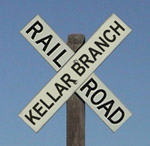
Kellar Branch RailroadJournal Star reporter and columnist Terry Bibo reports today that the Peoria Park Board is flummoxed as to why their plans to convert the Kellar Branch rail line to a trail isn’t moving forward. While they have traditionally pointed fingers at everyone from Pioneer Railcorp to the Surface Transportation Board, they have a new target now: the City of Peoria.

“That sounds like either the city is asleep or the city is in bed with that concept,” said Vice President Jim Cummings.

“That’s an interesting observation,” said President Tim Cassidy.

Oh sure, it’s the city’s fault now. They who have consistently voted in favor of the trail. They who have spent hundreds of thousands of dollars on legal counsel to try to get regulatory approval to build the trail. They who signed a 99-year lease at $1 per year with the Park District to use the land for a trail. They’re the ones holding things up, the Park Board says.

I wish. It would be a beautiful thing if the City finally decided to keep the rail line and canceled its contract with the Park District. But I don’t foresee that happening.

If the Park District is looking for someone to blame, it should take a good look at itself. Their all-or-nothing stance on this issue is the obstacle that is standing in the way. If they would try to find a way to build the trail around the rail line, they could have the thing built in a couple of years.

All they need to do is put the trail on the railroad right-of-way next to the tracks where feasible, and then move it adjacent to a parallel street where necessary. It can be done, and they can find grant money to do it, by modifying their ISTEA grant (which they’ve done once already) and/or getting IDNR grants (like they have for the rest of the trail line).

I think I’ve figured out the reason they’re so hard-nosed on this issue, though. The Journal Star article mentions that the Park District is moving their administrative offices to the former IDOT building at Knoxville and Prospect, which is right on the Kellar line. My guess is they want to have the trail going right by their new administrative offices, and that’s the real reason why they’re so unwilling to compromise.

Schock to officially announce candidacy Saturday

I just got a notice in the mail today that says:

Grab a ticket on the Schock Express

Representative Aaron Schock’s Official 18th Congressional District Campaign Announcement

Date: 27-Oct-2007
Class: First
Ticket Type: One-Way to Victory

To:
10:00–Hamilton’s–100 Northeast, Jacksonville
12:30–Hilton Hotel–700 East Adams St., Springfield
3:30–Peoria Heights Village Hall–4901 N. Prospect Rd., Peoria Heights

On the back is a letter from Rep. Schock:

Dear Republicans:

Please join us at my official announcement and campaign kickoff rally for Congress. It will be a festive and free event with everyone invited–the more the merrier!

I will express why I am running and lay out my vision for our country, stands on the issues and what I intend to do as your next Congressman. It will mean a lot to have Republicans like you there to hear what I have to say and help me launch this campaign as I take my message to the voters.

It will be a fun, old-fashioned political rally that I hope you will be a part of. Your support means a great deal to me and will be a boost towards winning this race. You are essential to my success. I hope you can join us at one of the stops!

Respectfully,
Aaron Schock

I was beginning to wonder why he hadn’t officially announced yet.

City agrees to cancel tickets

The City of Peoria held a press conference yesterday at Peoria Police headquarters to announce that tickets given to high school students at Manual and Woodruff for walking in the middle of the roadway and/or jaywalking will be abated if the students attend mandatory school assemblies where police officers and school officials will try to give students a “better understanding of the rules.”

Police Chief Steve Settingsgaard stood by his officers, again reiterating that they acted appropriately, even though that’s disputed by local African American leaders. However, he felt the need to “move beyond that disagreement” and recognize that the city, school board, and African American leaders such as local NAACP president Don Jackson all “wanted to get to the same place,” i.e., a safer environment for the children and the motoring public. “We can get there through this assembly process,” he said.

The assembly process should be completed before Thanksgiving.

Don Jackson stated on behalf of the NAACP, “we enthusiastically support this resolution.” Rev. Harvey Burnette, who had previously asked that the tickets be reduced to warnings, was pleased with the outcome. Dr. Rita Ali of the King Holiday Committee also spoke in favor of the resolution.

The agreement was reached during a meeting that included representatives of the city, police, school district, NAACP, King Holiday Committee, and pastors. These groups will continue to meet to improve “community/police relations.”

My two cents: Message received. Tickets can be adjudicated in the court of public opinion. Fines can be wiped away if enough public pressure and, most importantly, the race card are applied. No need to go through established processes.

I realize racism exists and is a problem in this community. One need look no further than the Journal Star website’s comments section to see it on display every day. But these tickets had nothing to do with racism. They had everything to do with children walking in the middle of the street, obstructing motorists, and intimidating drivers.

Yes, in one case, there was an eyewitness who said the children she saw were not walking in the middle of the street. But wouldn’t it have been better to have that come out in court? To have the police and the eyewitness testify and let a judge make a determination? Then it’s on the record, and steps can be taken to rectify that situation through established processes. Isn’t that the reason those systems were established in the first place?

Instead, these children plus all the other students who were ticketed — meaning all those whose culpability was never disputed — get off scot-free. What message does that send?

It sends the message that playing the victim and accusing police of racism works. It sends the message that African Americans evidently can’t get a fair hearing in a court of law, so their hearing needs to be held in the court of public opinion instead. It sends the message that African Americans and the police are enemies who need some sort of arbitrator in the form of a “community/police relations” committee.

It sends the wrong message. It doesn’t teach the students personal responsibility for their actions. And it does nothing to battle real racism.

One post-script: the police chief did say that “there will be enforcement in the future.” Hopefully that future enforcement will be supported by all community leaders so we can get back to dealing with the real problem in this particular case: children walking in the middle of streets.