
All posts by C. J. Summers

I am a fourth-generation Peorian, married with three children.

Woodruff High School may close

From WMBD-TV:

The district is proposing the following: Closing Tyng primary school and consolidating Harrison, Garfield, Tyng and Trewyn into three pre-kindergarten through 8th grade buildings. The district also wants to close Woodruff High School and essentially merge it with Peoria High.

And from the Journal Star:

With the proposed closure of Tyng this year, students from Tyng, Garfield, Harrison and Trewyn will be consolidated, making the three open schools all pre-K through eighth-grade buildings.

Irving and Kingman also are on the list to close by the end of this school year; the Lincoln-Woodruff site would reopen as a pre-K through eighth-grade campus.

To curb the total number of students at a merged Woodruff-Peoria high school, officials proposed creating a “ninth-grade academy” to be housed at Loucks School for a year until Peoria High could be expanded. That’s provided the renovations at Thomas Jefferson school, closed this year because of a fire, are completed in time, because those students now are at Loucks. Eighth-graders at Hines and Von Steuben schools who would have attended Woodruff or Peoria High would attend Richwoods under the plan.

This plan actually makes sense. Don’t get me wrong — I’m not at all happy about school consolidation, larger class sizes, fewer teachers, or the loss of neighborhood schools. I still think that District 150 administration is top-heavy (and heavy on consultants, aka rehired retirees) and that cuts should start there. But assuming that the school district’s financial situation is as dire as they say it is, and assuming that consolidation is the only way to bridge the funding gap, this makes sense.

High school enrollment is not high enough to support four high schools in Peoria. Geographically, we have one high school to the north (Richwoods), one to the south (Manual), and two that are very close to each other in the middle (Central and Woodruff). It would make sense to close one of the high schools in the middle. Central is the older and more geographically centered of those two schools; it makes sense to keep it.

Reusing the Woodruff/Lincoln campus accomplishes two things: it lowers construction costs because a new primary school won’t need to be built on the campus, and it preserves the building for future use as a high school if enrollments go up again someday. I also like the return to K-8 schools instead of the primary/middle school setup.

However, Terry Knapp and Martha Ross are right. The board needs to solicit and seriously consider ideas from parents, teachers, principals, and staff members — not just make decisions in a vacuum. “It seems like just one or two people are making the decisions,” Martha Ross said, according to the Journal Star. Unfortunately, that’s standard operating procedure for District 150.
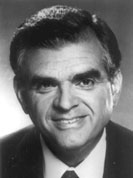
LaHood gets heat from press over earmarks

The Washington Post is questioning Barack Obama’s pick for Secretary of Transportation for a familiar reason:

The former Republican congressman chosen by President-elect Barack Obama to direct billions in federal highway spending has been an unapologetic advocate of earmarks, a practice Obama now opposes, and has used his influence to win funding for projects pushed by some of his largest campaign contributors.

It’s interesting to see LaHood’s earmarks reported in the national press. The Post goes on to list how much money in earmarks LaHood secured for Caterpillar, Lakeview, PeoriaNext, and road projects. They also report who his top campaign contributors are and match that list up to how much he secured in earmarks for those contributors. Cat’s contributions are no shock, of course. But I was unaware of these large contributors:

Local road-building companies also have supported LaHood. United Contractors Midwest, led by president James Bruner, is often ranked as his second or third largest donor, and its officials have donated $24,925 to LaHood. Three leading members of the Illinois Asphalt Pavement Association have given more than $60,000 to LaHood.

And:

LaHood also has been criticized for his ties to a longtime Republican state kingmaker in Illinois, William F. Cellini Sr. […] LaHood’s road-building earmarks have highlighted his relationship with Cellini, head of the Illinois Asphalt Pavement Association and other businesses.

Forgive me for being cynical here, but that would certainly explain why LaHood favors road and paved trail projects, and has opposed expanding Amtrak service to Peoria.

Government watchdog groups are not pleased with LaHood’s nomination. They say “LaHood’s selection does not bode well for Obama’s pledge to return transparency to government spending,” according to the Post.

“This guy has history of pork barrel spending and lot of a questionable spending linked to his friends. He’s going to be in charge of funneling hundreds of billions of dollars into local projects . . . and he’s not going to be suddenly changing his stripes tomorrow,” said Leslie Paige of the watchdog group Citizens Against Government Waste.

Nevertheless, I’m under no illusion that this will in any way derail LaHood’s confirmation. After all, if Treasury secretary nominee Timothy Geithner can continue to garner praise and support despite the fact that he didn’t pay his taxes for the past four years, one wonders what it would take to disqualify a nominee.

The future of transportation

Richard Gilbert and Anthony Perl have a book out called “Transport Revolutions: Moving People and Freight Without Oil.” I haven’t read the book, but I heard an interview with Perl on this week’s Smart City radio show. It sounds like he and his co-author have an interesting prescription for our transportation systems.

There are lots of different energy forms out there: gasoline, ethanol (corn-based, switchgrass-based, etc.), hydrogen, solar, nuclear, wind, hydroelectric, coal, natural gas, etc. Many of these forms of energy simply aren’t feasible for vehicles (e.g., solar, wind). The ones that are feasible for vehicles would require engines to be modified or changed completely. For instance, if the country wanted to take advantage of hydrogen power, a whole new line of cars would have to be produced that could take that kind of fuel, and fueling stations would have to be built throughout the country. It’s a very expensive proposition.

Perl and Gilbert think the answer is electric motors. They point out that electricity is not a source of energy, but a carrier of energy. By going to electric motors, you move energy production to centralized power plants, which can make use of several different sources of energy. Electricity can be generated at the plant by coal, wind, hydroelectric, nuclear power, solar, etc., or a combination of methods – the point being, it could all be generated domestically, without having to import oil. And it could adapt quickly to new sources of energy – more quickly than changing everyone’s car in America over to some alternative fuel.

Electricity could be delivered to cars through batteries. It could be delivered to trains and even buses through catenary. But whenever the source of fuel changes, it wouldn’t result in having to change vehicles and delivery systems, etc., because they would all run on electricity, so it would be a seamless transition.

Perl and Gilbert had quite a bit to say about trains in particular. Trains are already a very efficient way to transport people and freight. By running the nation’s trains on electricity, Perl & Gilbert believe they can be even more efficient, and serve a larger purpose as well – electricity delivery. If the rail corridors were electrified, they could not only provide power to trains, the excess power could also be distributed throughout the nation for other purposes as well. Rail corridors crisscross the nation, setting up a pretty efficient grid that could be utilized to distribute power between cities and even states.

Hence, the authors think Obama’s infrastructure stimulus should go toward improving and electrifying the nation’s rail system rather than building more highways or airport runways.

What’s funny about this whole discussion is that many cities including Peoria used to have electric trains serving them about a century ago. Peoria had electric streetcars up until the 1940s. And there used to be interurban electric trains that would serve central Illinois called the Illinois Traction System. All those systems have long been dismantled, and it would take a lot of money to recreate them.

This is why I hate seeing infrastructure — for instance, the Kellar Branch rail line — destroyed for no good reason. That corridor could be used for more efficient movement of people and freight through the heart of the city, and such a system will undoubtedly be needed in the future. Pulling it out for a walking path (especially when a walking path and rail corridor can coexist peacefully) is a waste of resources.

On the positive side, work is continuing on a feasibility study of returning Amtrak service to the area. Hopefully we’ll hear the results early in 2009.

New theme… maybe

You may notice that I’ve switched my theme. I’ve been using a WordPress theme called Wu-Coco for, oh I don’t know, maybe three years? I rarely fiddle with the theme on my blog since it can be disorienting, but I felt like maybe this January it could use some freshening up. So now I’m using a theme called Paalam (which I’m told is the Tamil word for “bridge”). Let me know what you think of it. If you all just hate it, I can easily switch back to my old theme.

The main thing I like about this theme is that it’s wider. The columns in Wu-Coco are a bit narrow, especially the main column. Anyway, give it a test run, tell me what you think. Thanks!

Midtown Plaza Cub Foods closing in March

The following info just hit my mailbox while I was home for lunch:

Mr. Curt Craig from Cub Foods in Minneapolis [said] they are closing the Midtown Plaza Cub Food Store. […] This will happen the first part of March, with the last employees leaving mid-March.

You remember Midtown Plaza. The City paid $5.5 million to clear the land (including knocking down old ladies’ houses on Dechman) required to make way for this project and made the area a TIF district after rejecting their own consultant’s report that said this was a bad deal for the City. They listened to the developer’s consultants instead.

The city’s consultant (Development Strategies, Inc.) predicted, according to a Journal Star editorial on 3/9/1999, that Cub Foods “would draw 90 percent of its customers from other city grocery stores.” Joseph’s consultants (Melaniphy & Associates, Inc.; Deloitte & Touche) predicted “43 percent of revenues would come from customers living outside the city” and that Cub Foods “would draw customers from a 10-mile radius.”

The city’s consultant was right. After Cub Foods opened, Thompson’s/Sullivan’s and John Bee both closed. With the loss of Cub Foods, where are East Bluff residents supposed to go for groceries now?

Also, will the city get a refund on that TIF money from the developer?

Questioning museum attendance projections

Reading over the Peoria Riverfront Museum information on the County’s website, I found page 211 especially fascinating. There, in black and white, is a “Museum Benchmark Matrix” comparing various museums around the country, their square footage, metropolitan statistical area (MSA) population, annual attendance figures, and other information.

Here is a simplified chart of all the museums that listed their annual attendance figures (I’ve added Peoria’s proposed museum to the end of the list):

Museum Location MSA Pop. Gross SF Annual Attendance
Science Station Cedar Rapids, IA 252,784 20,000 27,000
Science Spectrum Lubbock, TX 267,211 85,000 185,000
Putnam Museum Davenport, IA 376,160 115,000 190,000
Sci-Port Discovery Center Shreveport, LA 387,583 92,000 200,000
Gulf Coast Exploreum Mobile, AL 404,406 55,000 220,000
Exploration Place Wichita, KS 596,452 100,000 180,000
Louisville Science Center Louisville, KY 1,233,735 129,000 315,000
Kalamazoo Valley Museum Kalamazoo, MI 323,264 60,000 125,000
Peoria Riverfront Museum Peoria, IL 371,206 81,000 240,000 (est.)

Notice anything unusual or surprising? That’s right. The projected attendance for Peoria’s museum block is more than every other museum in the matrix, except for Louisville’s, where the MSA is over 1.2 million people.

In case you’re wondering where I got the 240,000 figure for attendance, here’s the scoop: the museum folks are estimating 360,000 visitors per year for the whole block. But they split that up this way: 1/3 of those people will attend Caterpillar Experience only, 1/3 will attend the Peoria Riverfront Museum only, and 1/3 will attend both. That means that only 2/3 of the 360,000 estimated visitors to “the block” will go to the Peoria Riverfront Museum (360,000 x 2/3 = 240,000).

It’s tricky trying to figure out their numbers, as you can see, because they often treat the whole block as a single project in their campaign literature. But it’s really two projects; and if you want to compare apples with apples regarding the museum, you must first split the projects apart.

So let’s see if Peoria’s numbers hold up to some mathematical scrutiny. Let’s look at market penetration. We’ll take the average attendance and divide it by the MSA population for each of the museums listed in the matrix:

Museum Att./Pop.
Science Station 10.7%
Science Spectrum 69.2%
Putnam Museum 50.5%
Sci-Port Discovery Center 51.6%
Gulf Coast Exploreum 54.4%
Exploration Place 30.2%
Louisville Science Center 25.5%
Kalamazoo Valley Museum 38.7%
Average 41.35%
Peoria Riverfront Museum 64.7%

As you can see, the projections for Peoria’s museum are well above the average of other museums in the matrix. If Peoria were to get the 41.35% average penetration, it would come out to about 153,494 visitors per year.

Now, I’m going to guess that the argument will be that these are old numbers — possibly as old as 2004 — and that the museum’s projected attendance figures are for 2011, which is the date they hope to open the museum. So, let’s assume that 153,494 is a 2004 figure, and that attendance would increase at a rate of 3% per year. Over seven years (2004-2011), that would bump up the attendance to 188,788 visitors — still far below the 240,000 figure being projected. To get to 240,000, you’d have to assume that attendance would grow by almost 7% each year. It’s also worth noting that museum officials have been projecting “200,000 to 250,000 visitors a year” since 2003 (“Report touts museum impact,” Peoria Journal Star, 4/8/2003).

Granted, my methods are not nearly as scientific as the “common sense” methods employed by others, but I think a case could be made that the museum’s attendance estimates are wildly optimistic.

Bob Manning takes on his critics

Bob Manning dared to criticize the proposed museum project last month when the council was asked to amend the museum’s redevelopment agreement for the third time. Since then, he’s been pummeled in the Forum section of the Journal Star by the likes of Jim Maloof and Jim Baldwin. Manning wrote his own letter to the editor, mostly responding to Baldwin’s letter, but shooting back at his critics in general with this paragraph:

Let this be a warning to anyone who considers running for the Peoria City Council. If you disagree with the agenda of the “self-anointed” leaders in this community, they will come after you with personal attacks. They will not debate the issues on substance. Rather, you will be criticized for standing in the way of “progress” (read “their pet projects”).

After writing this blog for three and a half years, I can understand Bob’s frustration. No matter how much you try to speak to the issues, it seems that there’s always someone on the other side of the argument that takes your comments personally, and responds with a personal attack on your character. I guess if you can’t win the argument on substance, then the argument of last resort is the ad hominem attack.

When those attacks happen as publicly and with as much vitriol as the recent forum letters from community “leaders” against Mr. Manning, they backfire. After Maloof’s letter was published, there was not one comment in the Journal Star’s comments section in favor of Mr. Maloof’s point of view. Ditto with Mr. Baldwin’s letter. Instead, there has been an outpouring of support for Manning, including letters to the editor defending him, and thanking him for speaking out.

If this museum project is as wonderful as its boosters say it is, it should be able to stand up to scrutiny on its own merits. If it can’t, then no amount of personal attacks are going to save it.

Stupid criminal of the month

This made me laugh:

Jermaine D. Mitchell, 21, of 4417 W. Rockwell Drive called police about 9:40 p.m. to report he had been robbed at gunpoint in Dr. Martin Luther King Jr. Park, located in the 200 block of South MacArthur Highway.

Mitchell told officers the robbers stole his money, $48, and the nearly 40 grams of marijuana he just bought, police reports stated.

…Police also arrested Mitchell on a charge of possessing more than 30 grams of marijuana for admitting to having the drug.

Note: If someone steals your illegal drugs, don’t call the police.

Fifth district contest down to two

Doug Crew has pulled out of the fifth district council race, canceling the need for a primary there. That leaves Dan Irving and Gloria Cassel-Fitzgerald, both of whom ran two years ago for at-large council seats.

In the at-large race, the top five vote-getters each won a seat on the council. Irving came in sixth. Cassel-Fitzgerald came in ninth. Taking a look at the precinct results, Irving got more votes than Cassel-Fitzgerald in every precinct in the fifth district. Of course, past performance is no guarantee of future results, but this is a good sign for Dan. (Full disclosure: I supported Dan Irving in the 2007 at-large election.)

Something else that would help Irving is if he can pull in the same endorsements he picked up two years ago, which included Ray LaHood, Jim Ardis, and Patrick Nichting.

County committee approves museum tax referendum

From the Peoria County website:

The Peoria County Finance/Legislative Committee passed a resolution late this afternoon that would place a referendum on the April ballot asking voters to raise the sales tax rate 1/4 of one percent to help fund public facilities. The County Board must approve the resolution before the referendum can be added to the April ballot. The Board must make its decision by January 30; a special board meeting will be called to allow the full board to vote on the resolution. The date of that meeting has not yet been set.

Should the County Board pass the resolution, the voters will ultimately decide whether to support the sales tax increase. The referendum would include a sunset date, set 20 years from the effective date of the tax increase. If the referendum is on the April ballot and the voters support the sales tax increase, money raised from the increase will be used to help fund construction of the Peoria Riverfront Museum.

Interested persons may click here for more information on the museum funding. From the information library, please select MuseumPolicyConsideration-REPORT.pdf or MuseumPolicyConsideration-REPORTandATTACHMENTS.pdf.