
All posts by C. J. Summers

I am a fourth-generation Peorian, married with three children.

A new kind of poverty

The city says that a new development at Radnor Road and Willow Knolls “meets all the qualifications of Section 4 of the [Enterprise Zone] Act” (20 ILCS 655). Really? One of the qualifications in Section 4 is “(1) An area is qualified to become an enterprise zone which […] (c) is a depressed area.” And just what is “a depressed area”?

20 ILCS 655/3(c) “Depressed Area” means an area in which pervasive poverty, unemployment and economic distress exist.

By the way, “pervasive” means “spreading widely throughout an area or a group of people,” according to the Oxford American Dictionary. So, let’s take a look at Radnor Road and Willow Knolls, shall we? Here it is on a map (courtesy of Google):
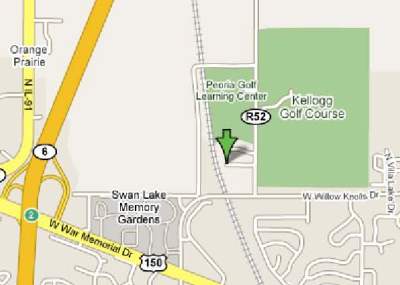
Radnor-Willow-Knolls Map

The development site is in that area just below the green arrow, bounded by Radnor to the east, Willow Knolls to the south, the Union Pacific rail line to the west, and Eagle Point Drive to the north. Here’s a house currently for sale on Eagle Point Drive:

3710 Eagle Point

Yes, the “pervasive poverty” in this area has depressed the listing price of this house (representative of houses in the area) to a paltry $264,900. Isn’t that awful? Too bad, too, because it’s right across from Kellogg Golf Course:

Kellogg Golf Course

This is obviously where all the unemployed in the area loiter. You often see them sitting next to the greens with “will caddy for food” signs. They’re unemployed because of the “economic distress” of the area:
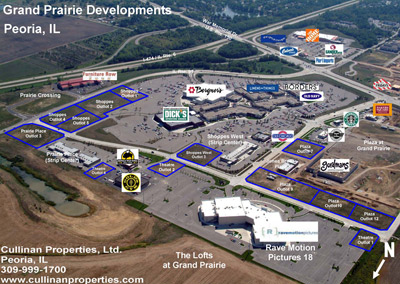
Shoppes at Grand Prairie and surrounding area
The Shoppes at Grand Prairie, 1.25 miles west

They’re also less than a mile from Sam’s Club, Willow Knolls 14 theater, and a plethora of relatively new development. We really should get together with some social service agencies and churches to work on caring for these poor, unemployed, economically distressed folks. The council is doing their part: they approved Enterprise Zone status at Tuesday’s meeting, 10-1 (Sandberg was the lone “no” vote).

Their reasoning? “Everybody’s doing it.” All over Illinois, they say, this is the way the Enterprise Zone is being used, so therefore, that’s also how we should use it. And if everyone else in Illinois were jumping off a bridge, then I suppose we would, too. The City’s economic development director Craig Hullinger also had this rationalization that he e-mailed to the council and also reiterated at the meeting:

There is some concern on the blogs about extending the Enterprise Zone to the new Horan development on Radnor.

This area is in the unincorporated County. They had proper zoning and sewer and water to build in the County, and they planned to do so.

By annexing them into the City and into the Enterprise Zone we give them a sales tax rebate on taxes for building material that we would not have gotten anyway if they had stayed unincorporated.

And we get a lifetime of property, sales, and utility tax from the development that would never have come to the City. And logical expansion of the city boundaries.

In other words, the ends justify the means.

Here’s the problem with this logic: it doesn’t tell the whole story. It’s a half-truth. Because the trade-off is less Enterprise Zone area that could be used to help legitimately depressed areas of the city, more land mass for the city to support with public works and public safety services which are already stretched thin, and an exacerbation of developer-welfare and the entitlement mentality among developers.

I think it’s interesting that the district councilmen in the first, second, and third districts voted for this measure even though it incentivizes businesses to move out of their districts and into the growth areas of the city. Even though it means less area that they could use to try to attract businesses to (and retain businesses in) depressed areas in their districts.

I also take issue with the idea that this development “would never have come to the City.” Never? Never is a long time. I think it’s most likely that growth in this area would have encircled this development within a few years, and the city would have annexed it anyway. I also think that the city probably has other tools it could have used to woo it into the city without further bastardizing the Enterprise Zone.

Questions for John Morris

There are a couple of questions I have about John Morris, one of three Republican candidates for the 18th Congressional District, that I don’t feel have been adequately answered:

  1. John MorrisWhen Morris decided not to run for reelection as a city councilman, he said it was so he could spend more time with his family. (May 1, 2007: “[T]he most important thing for me is to spend more time with my family.”) Yet he’s now embarked on a quest to become a U. S. Congressman, which will mean even less time with his family. Why the change?
    When I asked his campaign office about that today, they said that his family fully supports him in this race, and that eight years as a city councilman was long enough. Both excellent answers to questions that I didn’t ask. One logically-consistent but improbable conclusion we could draw is that, while Morris wanted to spend more time with his family, his family wants Morris to spend more time out of town. Like I said, improbable, but any other explanation I can think of makes him sound either wishy-washy or deceitful. So, it would be helpful if Morris would candidly answer that question, because it does make some people cast doubt on his veracity.

  2. On Dec. 1, the Journal Star reported that “WTVP was found in technical default [of their loan with Bank of America] in 2005 after failing to raise a specific number of pledges and pledge money, items covered in bond covenants.” John Morris was Vice President for Development at WTVP for 10 years — up until he took a leave of absence starting Sept. 17 to run for Congress — and it was his job to oversee fundraising for the station. So does that mean that Morris is responsible for WTVP being in technical default on their loan?

    Not according to Morris’s campaign office. They say he “exceeded his fundraising goals,” raising “more than $20 million” during his ten years of employment and winning “nine national awards” for his fundraising work. Again, we have a paradox. He met all his fundraising goals, but WTVP is in default because they didn’t meet their fundraising obligations. How do we resolve this antinomy? Was it that his boss wasn’t setting the fundraising goals high enough to be in compliance with WTVP’s bond covenants? That could explain the issue at hand, but would raise some unsettling questions about the management of WTVP. It would be nice if these questions could also be cleared up with some frank explanations.

Council preview: 12/11/07

The City Council meets Tuesday evening at 6:15 p.m. in City Hall, room 400. Here are the agenda items that caught my eye this week:

  • There are a couple of new businesses seeking to join the Warehouse District TIF. The first is LaVille de Maillet, LLC, which is buying the recently-closed Biggins Label Company building, 820 SW Adams. The development plan is to put shared office space in the front of the building and a residential apartment in the rear. Interesting trivia about the name of the company: “LaVille de Maillet” is what Peoria was called in the late 1700s when French villagers lived here (where downtown is now), led by French-Canadian military commander Jean Baptiste Maillet. The company is owned by Dennis Slape, publisher of the Numero entertainment guide. I’ve heard he’s going to set up a photography studio, and one of the other tenants may be ArtsPartners.
  • The second new business in the Warehouse District I’ve mentioned in a previous post. Drumheller Bag Corporation of Clarksdale, Mississippi, is expanding and has decided to add a new plant here in Peoria. In fact, they like it here so well, they’re moving their headquarters here, too. They’ve already hired 57 employees, 50 of which are former Bemis workers.
  • Does a development on Radnor Road really need to be part of the city’s enterprise zone? Would you consider Willow Knolls and Radnor Road to be a “depressed area,” qualifying for enterprise zone status? City staff and the Planning Commission think so. You really should click on that link and read the council communication — you won’t believe it. Double A’s Pizza just got a loan from the city’s Business Development Loan Fund in August of this year, and now they’re planning to move to this new development at Willow Knolls and Radnor, just outside the city limits. The city doesn’t want to lose the sales tax revenue (how much pizza do people eat out there?), so they’re offering this Enterprise Zone status to try to lure the development into annexing. Huh? I can only assume that it meets the letter of the law, but surely this use of the Enterprise Zone violates the spirit of the law. And do we really need more land annexed when we can’t adequately provide city services to the land we already have?
  • As previously reported, the neighbors in Vinton Highlands don’t want a gate between their subdivision and the new, upscale Coves subdivision. So the Traffic Commission is recommending that the city deny the Coves developer’s request to install a gate separating the two neighborhoods. That’s the right decision; hopefully the council will concur.
  • Finally, there’s an agenda item regarding changes to the Land Development Code. City staff has been reviewing the code to see how it works or doesn’t work, and they have made some recommendations for change. Most of them are reasonable, but the Heart of Peoria Commission had some concerns with a few of them. We expressed those concerns at our last meeting and the public hearing held by the Zoning Commission. Staff apparently doesn’t agree, as they are still asking for approval of their changes as proposed, without making any changes based on HOPC’s recommendations. The result is a council communication that asks for council to choose to adopt either Option A, staff’s recommendation, or Option B, which is staff’s recommendation with HOPC’s changes. Considering the council did not give HOPC any funding this year, it will be interesting to see if they consider our concerns.

Pioneer responds to CIRY’s filing in Kellar Branch dispute

Kellar Branch RailroadIn their filing submitted Friday, but just posted to the Surface Transportation Board’s website today, Pioneer Industrial Railway has responded to Central Illinois Railroad’s recent petition to “hold in abeyance” the STB’s November 19 ruling.

Pioneer argues that Central Illinois Railroad (CIRY) has no legal basis to request that a decision be “held in abeyance,” and that CIRY is only filing under that terminology because they missed the deadline to appeal the STB’s decision and request a “stay” of the decision. Pioneer also defends itself against the allegations made in CIRY’s filing. Here’s the summary conclusion:

As the Board’s recent General Railway decision put it, a party may not avoid the obligation of meeting the Board’s procedural standards merely by assigning a different label to its request for relief. But that is precisely what CIRY has done here. Knowing that it has missed the deadlines to request a stay (and knowing further that it could not satisfy the stay standards anyway), it merely gives its stay request a different name – a request to hold the matter in abeyance. Of course, CIRY’s is not really a request to hold matters in abeyance, as PIRY has clearly established above. Moreover, although CIRY seeks “modification” of the November 19 Decision, it has neither requested reopening of the Board’s decision nor did it file a timely petition for reconsideration. In short, and as has been thoroughly demonstrated above, CIRY lacks any legal basis for the relief it seeks and is merely attempting here to bypass proper agency procedure. The Board must not let CIRY make a mockery of correct Board processes, and it should therefore deny CIRY’s Petition for these reasons.

But even if the Board were to address the merits of CIRY’s Petition, it has not made a case for any of the relief it seeks. Rather, CIRY engages in the typical attempts to smear PIRY, makes false and irrelevant allegations, and otherwise does its utmost to dig in its heels in an effort to deprive PIRY of access to the line and to block PIRY from fulfilling its common carrier obligations to Carver and to any other shippers that way wish to use the line. For all of these reasons, as discussed more fully above, CIRY’s Petition should be denied, and the Board should make clear that CIRY must not block or attempt to impose delay on PIRY’s ongoing efforts to restore rail service on this line.

A couple of things from earlier in the filing I found interesting:

  • Pioneer points out that CIRY claims it would be too costly to fix up the Kellar Branch track to provide service to Carver Lumber, but then states that it has spent $100,000 to fix up the Kellar Branch for the purposes of running a hi-rail vehicle of it:

    One wonders why CIRY would be willing to spend $100,000 to permit it to operate a hi-rail vehicle over the line when CIRY claims that such an expenditure “vastly exceeds the gross amount of revenues that CIRY would likely earn.” Perhaps CIRY answers this question when it admits that it is using the line for the storage of carload quantities of hazardous materials. Could it be that CIRY is not really in the business of providing common carrier service but rather in the business of storing hazardous rail cars? Could it be that CIRY is using its status as a rail carrier to take advantage of STB preemption so as to prevent the City of Peoria and the State of Illinois from interfering with what is apparently a lucrative business, i.e. storing hazardous materials in rail cars? One doubts that CIRY is truly concerned about safety over the line when it is using the line for the storage of dangerous and hazardous materials. PIRY has no such plans and intends to do what it always did – operate a line of railroad for local customers.

    This is an important distinction — CIRY is an out-of-town company that is using the city’s tracks to store hazmat cars from out of town. Pioneer, on the other hand, is a local company, headquartered in Peoria, that simply wants to serve local shippers on the Kellar Branch.

  • Pioneer also points out that CIRY filed this petition on its own, and that neither the City of Peoria nor the Village of Peoria Heights joined in this petition:

    As an initial matter, it is telling that the Cities, who are the actual owners of the Kellar Branch and who filed the adverse discontinuance in the first place, have not filed a request for stay, a petition to reopen, or joined in CIRY’s Petition. One would presume that, if the Cities continued to object to having PIRY on the line, they would be the ones taking legal action, but they have not done so. Indeed, the city council for the City on November 27 voted 6-4 to reject a motion for continued legal adversity against PIRY. The majority of the city council indicated a willingness to negotiate with PIRY, CIRY, and others to resolve the outstanding issues. Granting the Petition would simply undermine the city council’s desire to negotiate a settlement rather than to litigate.

    While all that is true, it is worth mentioning that the Village of Peoria Heights did, in fact, pass the resolution that the City of Peoria defeated. It’s also worth mentioning that Peoria Heights has not footed any of the legal bills associated with the efforts to turn the Kellar Branch into a hiking trail over the past decade-plus. Hopefully, someday, all the parties will be able to work out a mutually beneficial agreement and all this acrimony can come to an end.

STB orders rail carriers to get their act together by Dec. 14

The Surface Transportation Board has a message for the feuding Kellar Branch rail carriers: work out your differences or we’ll work them out for you. In a ruling released late Friday, the STB said:

[W]e direct that the parties [Pioneer Industrial Railway and Central Illinois Railroad] meet, in the presence of Board staff, to negotiate joint operating protocols for the Kellar Branch. Board staff will contact representatives of CIRY and PIRY to arrange for such a meeting, which shall take place no later than Friday, December 14, 2007, unless the parties have worked out a mutually acceptable arrangement before that time and so advise the Board.

Pioneer says it has tried to contact Central Illinois Railroad (CIRY) to work out an operating arrangement since the STB’s November decision was handed down, but none of their calls were returned. CIRY has reportedly said that they will not negotiate joint protocols until Pioneer has a contract with the city, despite the fact that CIRY itself does not have such an agreement with the City of Peoria or the Village of Peoria Heights.

The STB’s decision basically tells the two rail carriers to work things out between themselves, or else the STB will act as a mediator to ensure that both carriers have safe and equitable access to the Kellar Branch rail line by Dec. 14.

Jehan Gordon on the issues

I read on Billy’s blog that Jehan Gordon has her website officially up and running.

That’s cool. I always like to check out where the candidates stand on the issues. There’s one page on Ms. Gordon’s website about the issues. Here it is in its entirety:

Education…
As a member of the Pleasant Hill School Board and an employee of Illinois Central College, Jehan understands the importance of education. She will fight against the status quo and work to find alternative funding for our schools so that young people have a real shot at a quality education that isn’t determined by where they happen to live.

Jobs…
Jehan will work hard to attract more and better paying jobs to our area. She’s fighting to see that our area flourishes like surrounding communities with more economic development, more retail, and fewer abandoned buildings.

Access to Quality Health Care…
Jehan will work with other progressive leaders to improve access to comprehensive, high-quality health care services.

Regarding education, Ms. Gordon evidently feels there’s a positive correlation between the funding and quality of public education. In other words, higher funding equals higher quality, lower funding equals lower quality. But is that really the case?

According to the Interactive Illinois Report Card, during fiscal year 2005-2006, Peoria Public School District 150 spent $6,297 per pupil for instructional expense; Dunlap School District 323 spent $3,774 per pupil. Yet in 2006, only 59% of District 150 students met or exceeded standards, compared to 90% for District 323 students. With 40% less funding, Dunlap did 53% better than Peoria public schools. It’s also worth mentioning that the average teacher salary in District 150 is over $4,000 more per year than District 323 ($55,008 vs. $50,980, respectively). Something tells me that “quality education” is not determined by funding.

Regarding jobs, I found it a bit humorous that Ms. Gordon states she wants to “attract more and better paying jobs to our area,” then follows that up in the very next sentence by saying she’s going to make sure “our area flourishes like surrounding communities with […] more retail.” Retail jobs are not “better paying.” She doesn’t mention manufacturing or industrial jobs at all. Yes, I know there aren’t as many of those types of jobs as there used to be, but they still exist, and our city and state should be as competitive as possible to get them.

On a local note, I was pleased to see that Drumheller Bag Corporation from Clarksdale, Mississippi, decided to locate their expansion in Peoria, rehiring 50 former Bemis Bag Corporation employees! Drumheller is also relocating their headquarters to Peoria. We should be attracting more and more of these types of jobs.

Finally, as far as her stance on health-care, she wants “to improve access to comprehensive, high-quality health care services.” Thank goodness. That really sets her apart from the other candidates who are, presumably, the Joker and the Riddler. I wonder if she’s also for clean water and world peace?

I guess the bottom line is that she’s running on image, not substance. But I suppose that’s not a bad strategy because that’s what most voters respond to these days. Isn’t that why Schock is in office?

Council should also attend LDC training

I’ve got the date saved on my calendar: Saturday, January 26. That’s the day the city will be bringing in Lee Einsweiler from Code Studio in Austin, Texas, to do a refresher course on the city’s new Land Development Code that he helped create. John Sharp has an article about it in the paper today:

A meeting is scheduled for Jan. 26 to bring a variety of city officials together and train them on specifics of the LDC. Members of the city’s Zoning Board of Appeals, Zoning Commission, Planning Commission, Historic Preservation Commission, the Heart of Peoria Commission and Renaissance Park Commission will gather with city officials for a one-day training seminar focusing on hypothetical scenarios and decisions, using the LDC, that could emerge from them.

There’s only one crucial group missing here: the city council. I think all council members should also attend this session — especially the district council members from the first, second, and third districts. I’m hearing rumblings of more possible “exceptions” from not only the Land Development Code, but the form-based codes that were created for the Warehouse District, Sheridan-Loucks Triangle, Prospect Road Corridor, and Main Street Corridor. Not only are developers asking for exceptions, some council members are considering them.

If we make exceptions every time a developer comes and asks for it, then we’ve wasted a tremendous amount of time and money on these codes. Even if we get all the groups mentioned in Sharp’s article on board with the new codes, if the council compromises, it will be all for naught. That’s why I think it’s critical that they attend this training session.

Yes, I know they’re busy and already attend a lot of meetings. But this code affects 8,000 acres of Peoria. I think it’s important enough to warrant attendance by city decision-makers.

Peoria Amtrak study delayed

Amtrak LogoLate last year and early this year there was a lot of talk about IDOT and Amtrak doing a study on the feasibility of bringing passenger train service back to Peoria. At that time, it was estimated that the study would be completed by December 2007, or possibly early 2008 at the latest.

Yesterday, I e-mailed Illinois Department of Transportation spokesman George Weber to get an update on when that report would be available. He wrote, “The Peoria feasibility study will start sometime in early 2008. I don’t expect completion until Spring 2008.”

In a November e-mail to Mayor Ardis, he explained the reason the timeline had been pushed back. “Amtrak has been swamped with study requests since our success in the fall of 2006 and also has been busy responding to Federal legislative inquiries and requests for reports, hence the reason everything has been somewhat delayed.”

Peoria is in line to get its feasibility study after the Quad Cities study is completed. That study was due December 5, but has not yet been posted on the IDOT website.

Snow ban

If you don’t want to get a ticket, don’t park your car on a snow route tonight. I got this from the city this evening:

The Snow Parking Ban goes into effect with the accumulation of 2″ of snow.

If you live on a snow route, please find an alternate place to park your car tonight.

MORNING UPDATE (12/7): I received this update from the city this morning:

City crews worked overnight plowing and salting primary and secondary streets. Once completed, crews began plowing and salting residential streets and intersections.

Crews will continue working today, touching up routes where needed.

Citizens may call public works at 494-8850 to report problems.