Council should also attend LDC training

I’ve got the date saved on my calendar: Saturday, January 26. That’s the day the city will be bringing in Lee Einsweiler from Code Studio in Austin, Texas, to do a refresher course on the city’s new Land Development Code that he helped create. John Sharp has an article about it in the paper today:

A meeting is scheduled for Jan. 26 to bring a variety of city officials together and train them on specifics of the LDC. Members of the city’s Zoning Board of Appeals, Zoning Commission, Planning Commission, Historic Preservation Commission, the Heart of Peoria Commission and Renaissance Park Commission will gather with city officials for a one-day training seminar focusing on hypothetical scenarios and decisions, using the LDC, that could emerge from them.

There’s only one crucial group missing here: the city council. I think all council members should also attend this session — especially the district council members from the first, second, and third districts. I’m hearing rumblings of more possible “exceptions” from not only the Land Development Code, but the form-based codes that were created for the Warehouse District, Sheridan-Loucks Triangle, Prospect Road Corridor, and Main Street Corridor. Not only are developers asking for exceptions, some council members are considering them.

If we make exceptions every time a developer comes and asks for it, then we’ve wasted a tremendous amount of time and money on these codes. Even if we get all the groups mentioned in Sharp’s article on board with the new codes, if the council compromises, it will be all for naught. That’s why I think it’s critical that they attend this training session.

Yes, I know they’re busy and already attend a lot of meetings. But this code affects 8,000 acres of Peoria. I think it’s important enough to warrant attendance by city decision-makers.

Peoria Amtrak study delayed

Amtrak LogoLate last year and early this year there was a lot of talk about IDOT and Amtrak doing a study on the feasibility of bringing passenger train service back to Peoria. At that time, it was estimated that the study would be completed by December 2007, or possibly early 2008 at the latest.

Yesterday, I e-mailed Illinois Department of Transportation spokesman George Weber to get an update on when that report would be available. He wrote, “The Peoria feasibility study will start sometime in early 2008. I don’t expect completion until Spring 2008.”

In a November e-mail to Mayor Ardis, he explained the reason the timeline had been pushed back. “Amtrak has been swamped with study requests since our success in the fall of 2006 and also has been busy responding to Federal legislative inquiries and requests for reports, hence the reason everything has been somewhat delayed.”

Peoria is in line to get its feasibility study after the Quad Cities study is completed. That study was due December 5, but has not yet been posted on the IDOT website.

Snow ban

If you don’t want to get a ticket, don’t park your car on a snow route tonight. I got this from the city this evening:

The Snow Parking Ban goes into effect with the accumulation of 2″ of snow.

If you live on a snow route, please find an alternate place to park your car tonight.

MORNING UPDATE (12/7): I received this update from the city this morning:

City crews worked overnight plowing and salting primary and secondary streets. Once completed, crews began plowing and salting residential streets and intersections.

Crews will continue working today, touching up routes where needed.

Citizens may call public works at 494-8850 to report problems.

Rail Rage

I just received a copy of this e-mail from City Manager Randy Oliver this morning:

Dear Mayor and Council:

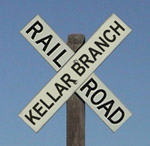
We just received a call that both Pioneer and Central Illinois Rail were attempting to access the Kellar Branch line this morning. One of the Rail Carriers wants the other [arrested] for trespass. We advised the Officer responding that neither Carrier had authority to operate from the City of Peoria, however, both derived any authority from the Surface Transportation Board (STB). Consequently, neither should be charged with trespass and the STB would need to resolve the issue.

We just wanted you to be aware of the situation.

Randy

Meanwhile, Central Illinois Railroad has filed a petition with the Surface Transportation Board to hold their previous decision in abeyance “so that the parties can resolve issues relating to the rehabilitation of a deteriorated and out of service rail line and Peoria can determine which carrier should operate over its railroad line.” The city’s railroad attorney thinks this petition has no chance of being granted. Pioneer is expected to respond on Friday.

In other Kellar Branch news, the Village of Peoria Heights passed the resolution that the City of Peoria recently tabled. They are also asking for $79,200 a year in rent according to the Journal Star.

UPDATE: Pioneer Railcorp president Mike Carr has written to the City Manager to explain the confrontation that happened today on the Kellar Branch:

Dear Randy:

My apologies for getting you involved in a situation outside of your normal work responsibility. I would like to explain to you what happened as follows:

As you know, it is our position that the STB has told us we can operate the line, and also directed both parties to work out an operating agreement. It is our position, that each company has equal rights to operate the line. I have tried, without success, since the STB ruling, to talk with Jack Stolarczyk about allowing us to inspect the line via hi rail. Stoalrczyk has ignored all of my calls. On the advice of our STB attorney in Washington DC that we have an equal right to occupy the railroad while we are working out an operating agreement, we took the necessary and required Federal Railroad Administration safety procedures, to afford protection to both our employees and CRY employees, and started our inspection this morning, via hi rail truck, starting on Adams street.

Apparently, Stolarczyk was planning to hi rail the line at the same time (?) with someone from the Park District (? according to the police) starting at Pioneer Park. Upon his arrival at Pioneer Park, he encountered our employee who was providing flag man protection to our employee hi railing the line. Stolarczyk went ballistic and called the police, even though I was able to get a cell phone handed to him and I tried to explain to him it is not a police issue (at this point I was in my car headed to the office). After Stolarczyk unceremoniously hung up on me, he committed a serious and flagrant FRA safety violation by ignoring our flag man, who told Stolarczyk that our employees were headed that way hi railing the railroad, and Stolarczyk proceeded to “charge” down the rail line with the intention of “meeting” our employee. This is a complete disregard for personal safety, and in my opinion speaks volume of Mr. Stolarczyk’s character. I hope I am mistaken with the fact that he had a Park District employee in the hi rail truck with him, because if there was a park district employee with him, Stolarczyk placed him in potential serious harm and had no regard for the Park Districts employees safety or well being. I instructed our employees to stop hi railing at the nearest crossing and to be prepared to leave the line upon visually seeing Stolarczyk headed towards them. When Stolarczyk approached, in violation of FRA regulations, we ceded the line out of respect for safety.

We intend to bring this issue up with the FRA.

Finally, I want to assure you that I had no idea that Stolarczyk had planned to inspect the line with the Park District this morning or we would have performed our inspection at a later time. Taken the wrong way, I can see where someone can turn this into Pioneer was obstructing CRY’s attempt to reach a deal for shared usage. It was purely coincidence, and you can strap me to a lie detector test if you like.

If you have any further concerns or questions please feel free to contact me via phone […].

Thanks.
Mike Carr

Will new Missouri law make children more vulnerable?

Kansas blogger Danny Vice (The Weekly Vice) recently commented on my post about Megan Meier. I found it provocative and interesting enough to make it a separate post:

On Wednesday, October 21st, city officials wasted no time enacting an ordinance designed to address the public outcry for justice in the Megan Meier tragedy. The six member Board of Aldermen made Internet harassment a misdemeanor, punishable by up to a $500 fine and 90 days in jail.

Does this new law provide any justice for Megan? Does this law provide equitable relief for a future victim?

The Vice rejects the premise of this new law and believes it completely misses the mark. Classifying this case as a harassment issue completely fails to address the most serious aspects of the methods Lori Drew employed to lead this youth to her demise. The Vice disagrees that harassment was even a factor in this case until just a couple of days before Megan’s death.

Considering this case a harassment issue is incorrect because during the 5 weeks Lori Drew baited and groomed her victim, the attention was NOT unwanted attention. Megan participated in the conversations willingly because she was misled, lured, manipulated and exploited without her knowledge.

This law willfully sets a precedent that future child exploiters and predators might use to reclassify their cases as harassment cases. In effect, the law enacted to give Megan justice, may make her even more vulnerable. So long as the child victim doesn’t tell the predator to stop, even a harassment charge may not stick with the right circumstances and a good defender.

Every aspect of this case follows the same procedural requirement used to convict a Child Predator. A child was manipulated by an adult. A child was engaged in sexually explicit conversation (as acknowledged by Lori Drew herself). An adult imposed her will on a child by misleading her, using a profile designed to sexually or intimately attract the 13 year old Megan.

Lori then utilized the power she had gained over this child to cause significant distress and endangerment to that child. She even stipulated to many of these activities in the police report she filed shortly after Megan’s death.

City officials who continue to ignore this viable, documented admission and continue to address this issue as harassment are intentionally burying their heads in the sand, when the solution is staring them right in the face. Why?

There are several other child exploitation laws on the books. To date, none of them have even been considered by City, State and Federal officials in this case. The Vice is outraged that a motion was never even filed, so that the case could at least be argued before a judge or jury.

Danny Vice

Step One: Do a real feasibility study

Kellar Branch RailroadTrail advocates — especially the Journal Star — love to throw out this figure: $29 million. That’s how much moolah it will take, they say, to build a trail next to the Kellar Branch rail line. Thus, it’s too expensive. Thus, we must pull up the rail line.

I wanted to find out how that figure was derived, so I called the Park District. Originally, I was told that all they had were engineering drawings; I asked how they came up with the estimated cost and was told there was “a spreadsheet floating around somewhere” but they didn’t know where it was. Later, when I relayed this story at an RTA meeting at which Bonnie Noble was in attendance, they changed their tune and told me they would get the information right out to me. Here it is:

C. J.:

I have attached the two estimates for your information. The side by side estimate is a square foot estimate based on topographical and sectional survey data and the on-track estimate is a takeoff from prepared construction plans; using cost data from previous jobs, local data and published data; taking into account labor, material, equipment, general conditions, etc. and using prerequisite standards and requirements of ADA, AASHTO (www.transportation.org), regulatory, insurance (liability) and numerous others.

Under the requirements of the ISTEA grant the PPD received, we must build a Class 1 Trail which is a bike path separated from highways by a greenway. If we deviate from a Class 1 Trail, we do not get a dime from the grant. Another consideration is the proposed trail is a combined or mixed-mode trail with both pedestrians and bicycles. The standards for a combined trail require a 10’ wide path with double 2’ shoulders for safety considerations (14’ total width). The completed portions of the trail meet these standards.

David Wheeler
Peoria Park District

And here are the two documents that were attached:

PDF Link Bike Trail Side-by-Side with Rail
PDF Link Pimiteoui Trail on Trackline Cost

I received these in March. I want you to take a look at them and tell me what you think. Especially if you’re a city council member, ask yourself if you would accept these estimates from your own city staff members or a hired consultant. Would you believe these numbers based on the information Mr. Wheeler provided?

Look at them and tell me who did these estimates. What materials are being used? How did they come up with the material cost and labor estimates? What is the corridor they chose for this estimate — that is, what is the exact path? Were any attempts made to mitigate the cost by choosing an alternate path, or different materials, or different methods? What is the exact location of all these trestles that are listed? Can they all be justified?

Now that the council is looking to bring all parties together to look for a win-win solution, I would suggest the first step is to do a real feasibility study. Hire an independent engineering firm, provide them with the necessary AASHTO standards and all that, and ask him to come up with the most cost-effective method of achieving a shared rail/trail corridor. Then let’s see what the real cost is. I bet it will be considerably less than $29 million.

The Chamber of Inconsistency

Magic 8-BallIn today’s article about the Peoria County Finance Committee’s meeting regarding the proposed museum, I was struck most by this line:

Roberta Parks, chief operating officer of the Peoria Area Chamber of Commerce . . . said the chamber at this point doesn’t have a position on whether it would support a sales tax or property tax to help fund the museum.

I wish I could figure out any rhyme or reason to the Chamber’s endorsement or non-endorsement of tax increases. They supported the library referendum, which would add “$50.00 a year in increased property taxes per $100,000 of assessed valuation or EAV.” But they don’t support the City of Peoria raising property taxes $10.00 a year per $100,000 of EAV to pay for police or fire protection. And now, they have no opinion on a whether to support a plan that would increase property taxes by $22.00 a year per $100,000 of EAV to pay for a downtown museum.

The only answer I can come up with is that they make these decisions by asking a Magic 8-Ball: $50 for libraries? “It is certain.” $10 for basic services, like public safety? “My reply is no.” $22 for a museum? “Cannot predict now.”

Does the Chamber have any credibility? “My sources say no.”

PJS: WTVP defaulted on loan

WTVP LogoI’ve been to WTVP’s studio at State and Water streets downtown. It’s not an attractive building on the outside, but the digital television equipment and studio space inside is enviable. I’d love to work on their video editing suite. But the building and equipment came with a hefty price tag: $10.3 million.

I heard a rumor a few months ago (August) that WTVP was defaulting on their benefit loans to pay for all that fabulous new equipment and space. My requests for information from WTVP went unanswered, so I dropped it.

Tonight, however, Journal Star columnist Steve Tarter is reporting that WTVP is indeed in default and now owes Bank of America the balance of the loan — $6.9 million:

While the 2001 bond agreement originally gave the station 22 years to pay back the bonds, WTVP was found in technical default in 2005 after failing to raise a specific number of pledges and pledge money, items covered in bond covenants…. Now WTVP faces a deadline of Jan. 15 to restructure the bank agreement….

Here’s a little second-hand conjecture: I heard from someone that part of the reason they are in default is because WTVP had originally hoped to make more money in production work (using their studios and resources to shoot and edit commercials for other businesses), but their prices were so high that prospective clients chose the more affordable professional production services of WEEK-TV. I have no idea if that’s true or not, but it sounded plausible to me.

In any case, it certainly looks like they misjudged how much equipment and building space they could afford, and now they’re in trouble. I hope the station doesn’t go black, because I enjoy public television — both the network programs and local shows. Best of luck to them.