Concerts start tonight

The big Christmas program performances start tonight, so as I stated previously, I won’t be doing much blogging. Depending on what the county decides about the museum thing or what the school board decides about the East Bluff school location, I may not be able to keep from commenting a little, but for the most part, blogging will be light.

There may be a guest editorial soon, however, so keep an eye out for that. In the meantime, feel free to use this as an open thread to talk about whatever you’d like.

Central Illinois Railroad stonewalling Pioneer

After the council voted to table the Kellar Branch resolution at tonight’s meeting, I talked to Mike Carr, President of Pioneer Railcorp. I found out that Central Illinois Railroad (CIRY) has been unresponsive to Pioneer’s numerous attempts to contact them and work out an operating arrangement.

In its recent decision to let Pioneer back on the Kellar Branch, the Surface Transportation Board directed the two rail carriers “to negotiate joint operating protocols.” In other words, work together in operating the line.

Carr told me that CIRY’s lawyer said they won’t let Pioneer on the line until Pioneer has an operating contract with the city. The funny thing is, CIRY doesn’t have an agreement with the city either. So that’s a rather hypocritical stance to take. And Pioneer has long argued that their operating agreement with Peoria is still in force, although the city maintains that it expired on its own terms in 2004.

However, there’s nothing that says Pioneer has to get CIRY’s permission to service the line; the STB’s decision gives Pioneer immediate access. Since CIRY isn’t servicing anyone to the north anyway, perhaps “negotiat[ing] joint protocols” is unnecessary.

Globe Energy wants to use rail service

HOI News is reporting that Globe Energy would like to use the Kellar Branch:

Over at Globe Energy they want to build the rail spurs into their building. They say it’s not about shipping costs. It’s more about the environment. David Jones with Globe Energy said, “There is a chance over the next five years we could save about 50,000 tons of carbon dioxide emissions that would come through trucks on the road that could be avoided if we used rail.”

Jones also said the Kellar Branch would be critical to exporting their heating systems to foreign countries by rail, although this isn’t a deal breaker for the company. “We are trying to put forward to industry that we are prepared to do it, provided that it can be done,” Jones said. If it can’t be done, then we will have to use trucks.”

So a vote for removing the rail line is a vote for 50,000 extra tons of CO2 emissions. I think air quality and not contributing to global warming is part of that “quality of life” stuff trail proponents are always talking about, don’t you?

Journal Star working overtime on Kellar Branch story

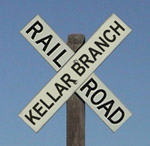
Kellar Branch RailroadThere have been lots of Kellar Branch articles in the paper the last couple of days. I hardly know where to begin.

The Editorial

Sunday was the big editorial. Mostly it was a rehash of the same tired arguments the trail proponents have had from the beginning. I have to give them credit for actually explaining the ruling, something the news report didn’t do.

But then they take a potshot at Pioneer Railcorp. “Pioneer, for example, is the company that filed a frivolous lawsuit against trail supporters….” First of all, the lawsuit was a bad idea, and Pioneer has admitted that now and apologized. But secondly, this issue has nothing to do with whether they’re a competent rail carrier. In contrast, Central Illinois Railroad tried to use a Trackmobile to haul lumber up the Kellar Branch, only to have it lose traction and careen backwards at 30 mph across several grade crossings — a threat to public safety. If you have to choose between the two of them, I think it’s in the public interest to pick the competent rail carrier.

And then they take another potshot at Pioneer in the same sentence: “…and employed multiple stalling tactics, among them physically blocking construction of an alternate spur meant to serve Carver.” They blocked construction of the spur because the city’s contractor, Metroplex, did not sign a liability waiver like they were supposed to have done. The city’s attorney attested to that fact at a council meeting earlier this year. So the editors have their facts wrong on that one.

But then it gets really goofy:

This is [rail proponents’] chance to follow through on the promise that the Kellar is a surefire economic boon. We’re dubious, but the time for excuse-making is over. We’re anxious to see real customers, not just imaginary ones, lining up for service along the Kellar despite a few decades of evidence to the contrary. And no, we don’t buy the uncertainty-will-spook-business argument some rail proponents have already begun peddling. If train delivery is that slam-dunk cheaper and more efficient and more reliable than truck, any reasonable business would get it while it’s available.

This has to be among the dumbest statements ever written by the editorial board. Any reasonable business that needs rail service is indeed going to get it — they’re just going to get it in Pekin or Rochelle — someplace where the future of reliable rail service isn’t obviously and perpetually in jeopardy. Does the editorial board seriously think that efforts by the City of Peoria, County of Peoria, Village of Peoria Heights, PPUATS, real estate developers, Rep. Ray LaHood, and the Peoria Park District to convert the line to a trail, all fully supported and reported on constantly by the Journal Star, have NO EFFECT on rail-served businesses’ decisions on whether to locate on the line? I don’t know what they’re drinking, but order me a bottle.

They go on to say that “Peoria and Peoria Heights should test Kellar’s viability without subsidizing it.” Fine, charge a fee for using the line. Just remember — that rate is subject to STB oversight as well. Charge too much and the city’s going to be paying more in lawyer fees to fight it before the STB than they’re going to make on rent. And, while we’re at it, let’s cut the subsidies to trucks for using city streets, shall we? Those streets are also owned by the city, and trucks drive on them for free. If I may borrow a line from the editorial writers, “Getting something for nothing is the very definition of welfare, and these for-profit [truck companies] do not qualify.”

Finally, the editorial writers make a passing comment on how trail advocates shouldn’t break the law as Nichting suggested — although they don’t mention Nichting’s name — and more or less conclude with this jab:

While it’s easy to say a side-by-side rail/trail is the obvious compromise, if the Peoria Park District’s estimated price tag for that option – approaching $30 million – is realistic, that simply won’t happen. Rail advocates like to poke holes in that number, but what expertise can they brag to give credibility to their cost estimates?

Okay, for the sake of argument, let’s just say that the Park District is absolutely right and their estimate is completely accurate. So what? Why won’t they build it at that price? I thought this line was supposed to bring economic development, more housing, better quality of life, etc. Isn’t it worth the price? The zoo expansion is $32.1 million, and it doesn’t provide even half the benefits advocates say this trail connection will provide in improved quality of life. It sounds like a $29 million price tag is a steal for those benefits. Why doesn’t the Journal Star think it’s worth the money?

Paul Gordon’s Column

In the same paper, Paul Gordon interviewed Alexis Khazzam and Heights Mayor Mark Allen about their development plans alongside the Kellar Branch. Said Khazzam: “It’s a proven fact people don’t want to live next to railroad tracks.”

Really? That’s funny, because the resolution the city council will be voting on Tuesday night says that 93% of the land along the Kellar Branch is residential. All those people live next to railroad tracks. All the people in 401 Water live next to railroad tracks. All the people who live next to the Union Pacific mainline on the west side of town, which includes Weaver Ridge residents, live next to railroad tracks.

And, most tellingly, Khazzam himself is still planning to put up a residential development even if the tracks stay. He says later in the same column, without a hint of irony, “this ruling will influence the type of housing we’ll offer” (emphasis mine). So, what he’s saying is that people don’t want to live next to railroad tracks, but he’s going to develop some type of housing next to the railroad tracks — housing in which, presumably, someone is going to live. Isn’t that fascinating?

Mayor Allen told Gordon just what he told me: He would prefer the trail as being more conducive to development in the works for the old Pabst/Cohen’s site, but that it won’t stymie development.

Word on the Street

Speaking of Mayor Allen, he and I were mentioned in Monday’s “Word on the Street” column. I thought it was well-written. Mayor Allen wrote to tell me that he said those comments in a lighthearted vein, which I’m sure he did. I got to talk with him last week about the decision and felt I had a pretty good read on his feelings on the issue, so I wasn’t offended by his quote in the paper. He’s doing a good job of looking out for the best interests of the Heights, and I respect his opinion, even though we’re obviously on different sides of the issue. I appreciate that his opinion is thought-out, well-reasoned, and not based on distortions of fact.

Mayor Allen will get his wish, sort of. There will be a number of rail proponents at Tuesday’s Peoria City Council meeting, and they will speak in opposition to the proposed Kellar Branch resolution that was written by trail proponents. It’s not in the Heights, but it is a public meeting.

The busy season starts

As you know, each December my church (where I work) does a big Christmas production — Grace Family Christmas — and it monopolizes my time from the week after Thanksgiving until Christmas day, although I do usually find some time here and there to write a post or two.

Well, it’s that time of year again. Blogging is going to be light from now until Christmas. I’ll probably have a post up in the next couple days about all the Kellar Branch stuff in the paper yesterday and today. Other than that, please consider this an open thread for you all to talk about whatever topic you’d like. I’d also encourage you to check out the fine bloggers on my blog roll in the right column.

Merry Christmas, everyone!

Highlights of upcoming Council meeting

There’s a city council meeting this coming Tuesday night, Nov. 27. There are a few noteworthy items on the agenda:

  • Public Hearing on 2008 City of Peoria Budget. This is your chance to tell the city what you think of the proposed budget, and what changes you think should be made.
  • Heart of Peoria Housing Market Survey. The Economic Development Department wants to hire a consultant — Tracy Cross and Associates — to “determine the market for housing and mixed use development” in the Heart of Peoria area, including downtown and the warehouse district.
  • Kellar Branch resolution. Patrick Nichting is carrying the Recreational Trail Advocates’ water by bringing their resolution to the council floor. This resolution was written before the STB handed down their recent ruling; now that the STB has ruled, the resolution is moot, and should be disregarded.
  • Ordinance requiring drug dealers/users be evicted upon first notice. Third District councilman Bob Manning and at-large councilman George Jacob are requesting that Peoria adopt an ordinance similar to one in Evansville, Indiana. “This ordinance requires property owners, who are given notice that illegal drug activity has occurred on their premises, to evict the tenants responsible for the illegal activity or otherwise abate the nuisance.” The hope is that this will cause landlords to act quicker to get rid of drug-using and/or drug-dealing tenants.

City Manager: Illegal activity will not be tolerated

It was all I could do to refrain from blogging yesterday. I sort of made a pact with myself that on the Thanksgiving holiday I wasn’t going to post anything, but leave up a happy, holiday message all day. I did it. But it was brutal. Why? Because of this news item:

“There are options,” Nichting, a trail proponent, said after learning that the U.S. Surface Transportation Board (STB), which has exclusive domain of the nation’s railroads, denied a request from Peoria and Peoria Heights to keep Pioneer Industrial Railway off the eight-mile line. “(The options) include litigation and possibly doing a Meigs Field operation. There one day and gone the next.”

Wow. It’s not often in Peoria that you have an elected official seriously suggest that the city deliberately commit a felony. The stupidity of Nichting’s statement is remarkable. If the city were to deliberately do a “Meigs Field operation,” they would be subject to civil and criminal penalties, and the federal government would likely order the rail line be restored at the city’s expense to boot. Nichting ain’t Daley.

But what makes Nichting’s statement most egregious is not the possibility that the city would really take such action — that’s most unlikely — but rather that it plants the idea in others’ minds. It gives the appearance of an official endorsement to anyone who might be inclined to vandalize the railroad line. That’s what makes his statement really irresponsible and reprehensible. The council should censure Nichting at their next meeting for making such a suggestion.

City Manager Randy Oliver will have no part in illegal activities. In an e-mail today, he said, “The Administration never has and never will be involved in any illegal activity. The Police Department’s District patrol cars have been alerted to the possibility that someone may try to destroy public/private property. Any actions of this type will not be tolerated.” So scofflaws, beware.

Happy Thanksgiving

Norman Rockwell Thanksgiving

This is an open thread for everyone to express what they’re thankful for this year. I’ll start by simply quoting the Irving Berlin classic, “I’ve Got Plenty to Be Thankful For,” from the movie “Holiday Inn”:

I’ve got eyes to see with
Ears to hear with
Arms to hug with
Lips to kiss with
Someone to adore
How could anybody ask for more?
…Oh, I’ve got plenty to be thankful for

Happy Thanksgiving, everyone!

Three big resignations at State Journal-Register

Gatehouse Media has been slashing staff all over the place — mostly through attrition. The Journal Star recently lost its managing editor of 15 years. Now there’s this word from Springfield:

State Journal-Register’s publisher Sue Schmitt, editor Barry Locher and managing editor Robert Pope each announced their resignations this afternoon. Their last day will be Dec. 14.

In a memo e-mailed to newspaper staff, Schmitt said she, Locher and Pope made their decisions independently.

Wow! But that’s not all. As this breaking news story also reminds us:

The announcement comes about a month after the newspaper offered a voluntary severance program to nearly 150 employees. The newspaper has not set a target for how many employees they want to participate and no specific employees have been targeted.

No doubt others from within the organization will move up the ladder, with those who were on the lowest rungs not being replaced. Perhaps Gatehouse is experimenting to see how few employees it takes to run a paper.

Let’s talk taxes

Since tonight is the Truth in Taxation public hearing (the Journal Star has a good article on this by John Sharp), let’s talk about taxes.

Here’s an interesting chart that I got from City Manager Randy Oliver. It shows a comparison of property tax rates from 1986-2006. The dark blue line is the City of Peoria’s tax rate (you can click on the graph to look at a larger image of it):

20-Year Tax Rate Graph (small)

Now the question is, what conclusions should we draw from this raw data?

Well, the thing that jumps out at you first is the precipitous drop in the city’s property tax rate around 1991-1992. I’d like to know what caused that. Did the city cut its budget that much that year? Or did they just shift the revenue source to something else, like motor fuel taxes or utility taxes? I’ve written a couple of people at the city with these questions, but they haven’t found an answer yet (any of my long-time-Peoria-resident readers happen to recall?).

Here are some other numbers to consider while comparing the tax rate over the past 20 years:

1986 2006 Difference
Population 117,766 112,936 -4,830
Total Area 41.02 mi.2 48.13 mi.2 +7.11 mi.2
EAV $733,041,040 $1,623,388,425 +$890,347,385
Tax Rate
per $100 EAV
2.6596 1.2879 1.3717
Tax Receipts
excl. TIFs
$13,036,924 $21,336,394 +$8,299,470

Interesting stuff, isn’t it? Even though the tax rate dropped by more than half between 1986 and 2006, revenue increased by more than 63% (or an average of roughly 3% per year). For most of the past 20 years, the city has locked down the tax rate and lived off the increase in Equalized Assessed Value (EAV). But can that go on forever?

The people I’ve talked to, including the city’s finance director, say no. In fact, adjusted for inflation, the tax receipts have actually gone down over the last 20 years. That $13 million in 1986 equals $23.98 million in 2006 dollars (according to this calculator).

A recent article in the National Cities Newspaper titled, “City Finances Okay for Now; Storm Clouds Ahead” (10/22/2007) warns about the near future:

“The picture for 2008 is less optimistic with city officials predicting a slowdown in revenues and increased spending pressures. Concerns about the health of real estate markets and their potential impacts on property taxes, combined with increased calls for property tax relief from homeowners and residents, will cloud the picture in 2008. Health care and pension costs, in particular, are increasing at a faster rate than city revenues.”

So what’s a city to do? People don’t want their property taxes to go up, but the city has obligations that it can’t just cut (e.g., basic services, health care/benefits for city employees, the combined sewer overflow project, etc.). And the rise in EAV obviously isn’t cutting it. That’s why we have the garbage tax. And the HRA tax. And sales tax. And the fuel tax. And a plethora of other taxes. These are new revenue streams that were created so the council could get the money the city needs and claim they “held the line on taxes.”

But that’s not really true, is it? Taxes are going up. Property tax revenues are going up because of increasing EAV, even if the tax rate remains the same. And in addition, other taxes are being raised and/or created to fill the gap that remains. So, we’re only fooling ourselves by insisting that property taxes remain low. We’re not saving any money or paying any less in taxes. The city’s still getting their money through other means.

So I think the real question we have to ask ourselves is, what’s the fairest way to raise revenue for the city? For example, is it fairer to put a $6 surcharge on water bills (a regressive tax), or to raise property taxes (a progressive tax)? Are these new revenue streams a bigger burden on the poor?